This is the English edition of a deep-dive originally written in German. The analysis, math, and editorial voice are ours — the translation was produced with AI assistance and reviewed by a human editor. If you spot an inaccuracy or an awkward phrasing, let us know via the site contact page. The original German version is linked at the top of every article.
What’s actually in a $5 booster?
Twelve cards. Four dollars ninety-nine at retail, four dollars sixty-nine if you’re in through Kickstarter. On first glance it sounds like another TCG booster that sells you statistical hope and mostly delivers commons. But once you pull the Cyberpunk TCG’s numbers apart, something unusual happens: the math actually starts making sense.
WeirdCo made the pull rate structure a central selling point of their Kickstarter campaign on purpose, and the comparison with the big competitors is, to put it politely, sobering for everyone else in the room. Where Pokémon averages around 1 in 72 packs for an Illustration Rare (and often far worse depending on the set), the hardest regular rarity in the Cyberpunk TCG sits at 1:24. Secret Rare. Four cards of them in the whole set.
Before we dive into the probability math, a quick look at the set itself so the numbers land with context.
The set at a glance
Welcome to Night City — the debut set of the Cyberpunk TCG — contains 171 unique cards: 140 regular cards plus 31 alt-art versions (the so-called Iconic Rares, more on those later).
Those 140 regular cards break down like this:
| Rarity | Count | Foil? |
|---|---|---|
| Common | 60 | No |
| Uncommon | 32 | No |
| Rare | 32 | Yes |
| Epic Rare | 12 | Yes, intensified |
| Secret Rare | 4 | Yes, premium treatment |
| Iconic Rare | 31 (Beta) + 31 (Retail) | Yes, exclusive |
Five tiers plus a special category. Sounds like a lot at first, but compared to One Piece (eight different rarity tiers these days) or the current Pokémon chaos of Illustration Rares, Special Illustration Rares and Hyper Rares, it’s still pretty clean.
Twelve cards, two slots, one stretch goal
Each booster contains twelve cards: seven Commons, three Uncommons, and two „Rare or Better“ slots. That last bit is the important part. Both slots guarantee at least a Rare card — meaning every single booster contains at least two foil cards.
That puts the rare share of the pack at 16.7 percent of total cards. For comparison: a standard Pokémon pack with ten cards guarantees exactly one „Reverse Holo“ slot and one „Holo Rare“ slot — so 20 percent, but the Reverse Holo is usually a card nobody wanted, and Pokémon packs these days cost considerably more than $5.
Fun detail: the second Rare slot only exists because the Kickstarter community hit the $4 million stretch goal. WeirdCo tied the second slot to a community milestone — clever marketing, but the effect is real. Anyone buying after the Kickstarter still gets both slots; it’s part of the product now.
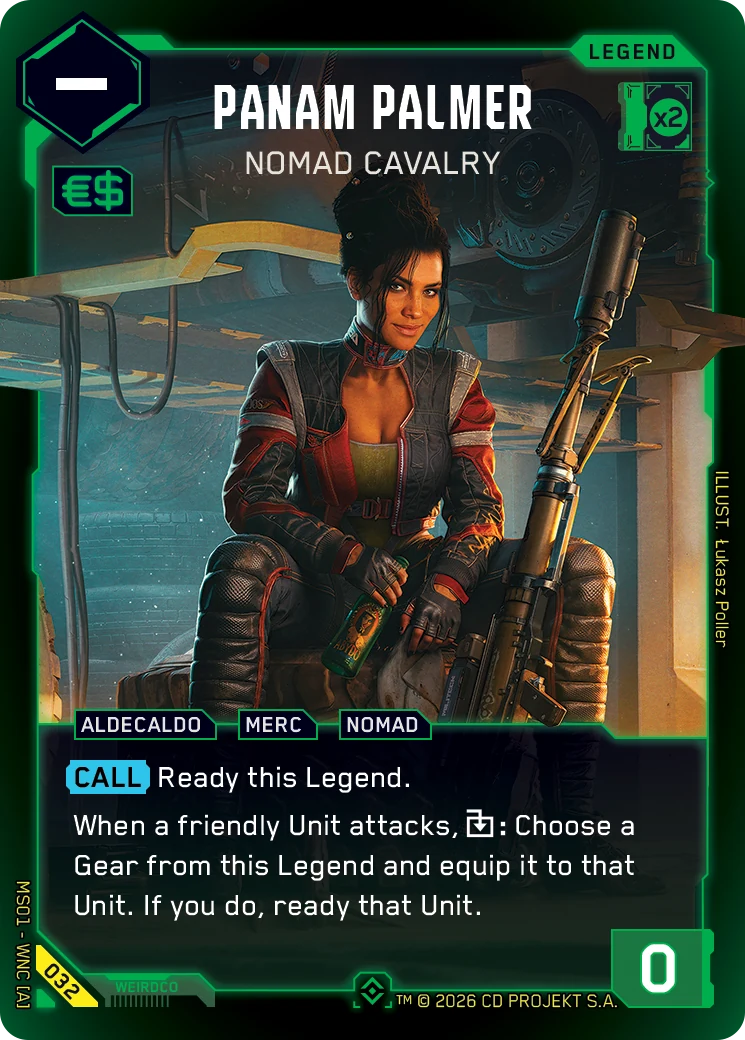

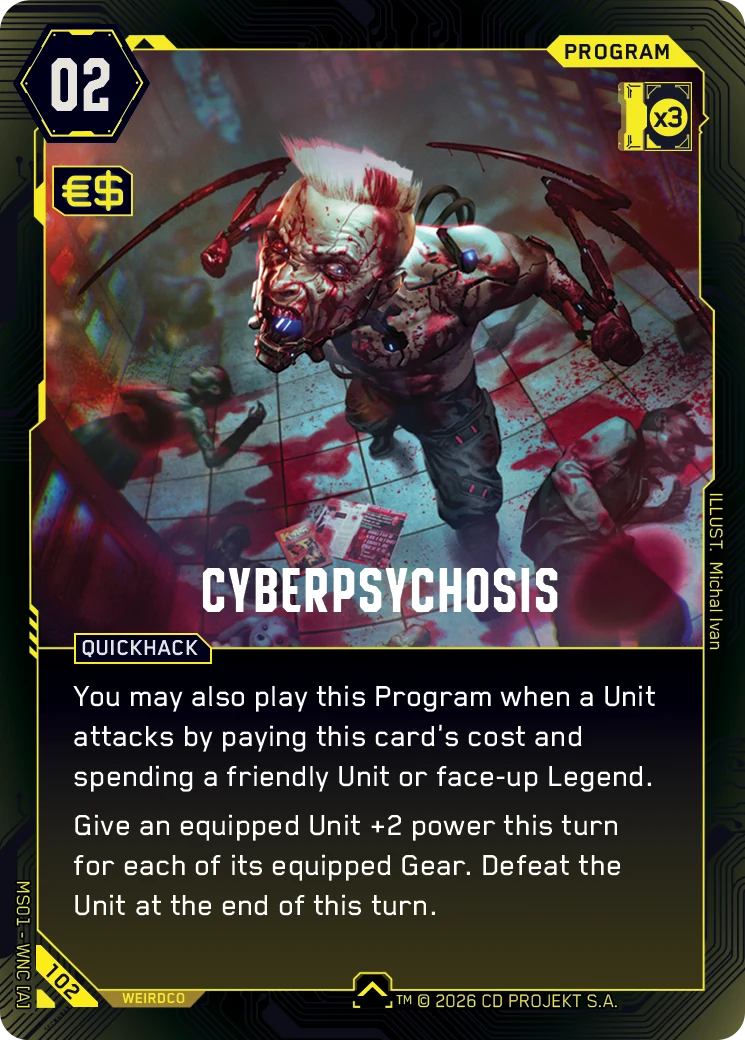

From Common to Secret Rare: Panam Palmer, Riding Nomad, Cyberpsychosis, Adam Smasher — Metal Over Meat
The visual quality gap between Common and Secret Rare is, as you can see in the images, substantial. Commons are solidly illustrated but plain. The Secret Rares — only four of them in the entire set — will ship with the „Chaotic Holographic Shimmer“ treatment according to everything we know from the Alpha Kit. That’s a multi-layered foil effect that catches light like a short-circuit in a Night City neon sign.
Context check: the Cyberpunk TCG enters a 2026 TCG market that’s been stirred up over the last five years by Disney Lorcana, Flesh and Blood, One Piece, Star Wars Unlimited and several smaller newcomer projects. Each of these games found its own answer to the core question: how much lottery feeling does a pack need to justify itself? Cyberpunk positions itself at the generous end of that spectrum with its 16.7 percent rare-plus share per pack. Less lottery, more playable cards — and the rest of this analysis looks at whether that equation actually works.
The pull rates in detail
Now to the actual math. What WeirdCo communicated in AMAs and on the Kickstarter page breaks down into concrete probabilities — but there are a few important gaps I’ll come back to.
Pack probabilities at a glance
| Rarity | Rate (per pack) | Percent | Expected packs to hit |
|---|---|---|---|
| Rare (minimum) | 2:1 (guaranteed) | 100% | — |
| Epic Rare | 1:4 | 25% | ~4 |
| Secret Rare | 1:24 | ~4.17% | ~24 |
| Iconic Rare | 1:18 | ~5.56% | ~18 |
25 percent Epic Rare per pack. On paper that almost sounds too good. For comparison: Dragon Ball Super Fusion World has its „Rare Rare“ cards at about 1:12 — sounds better, but DBS packs have only six cards, cost less, and the rarity hierarchy works differently. One Piece has „Leader“ cards in every pack plus a Super Rare chance around 1:32 for the most desirable ones. Pokémon ex Rares, depending on the set, land between 1:8 and 1:10 — but a Pokémon pack these days costs up to $7.
What sets the Cyberpunk TCG apart: the 1:4 Epic Rare rate applies to packs costing under $5. That puts the average price per Epic Rare at roughly $20 — slightly higher or lower depending on whether you buy Kickstarter or retail.
What does 1:24 actually mean in practice?
At 1:24 Secret Rares you can, on statistical average, expect one on every 24th pack. Sounds like a lot. But: that’s the expected value, not a guaranteed checkpoint. Probability theory isn’t a promise — you can open 50 packs without a Secret Rare, or hit one on your third.
More concretely: across 24 packs you have a 63 percent chance of seeing at least one Secret Rare. Across 48 packs that climbs to around 87 percent. If you want real certainty, plan for about 60-70 packs statistically — that’s almost two Beta Displays.
In dollars: a Beta Display (36 packs) for $169 delivers an average of 1.5 Secret Rares. Meaning one display gives you a good shot but no guarantee. A 24-pack Retail Display for $119.90 gets you one Secret Rare on average — and that tracks as an expected hit.
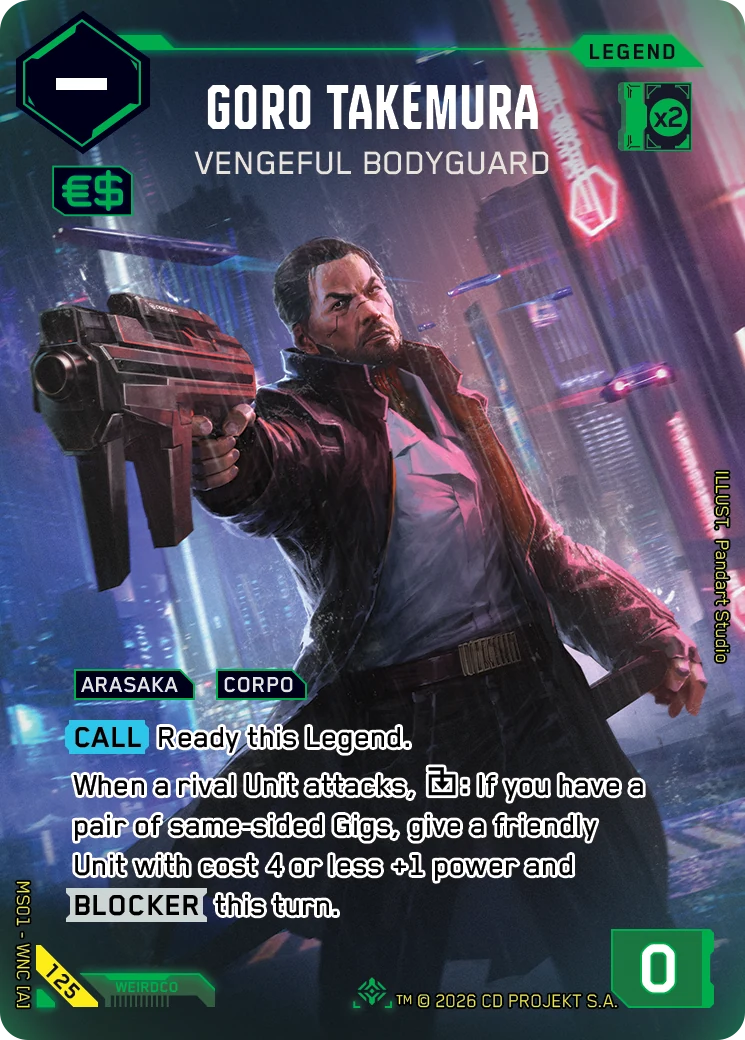

Epic Rares like Takemura and Hanako Arasaka you’ll pull regularly — Adam Smasher is a different story
Targeting specific cards: the math that matters
The overall rate tells you how often you pull any Epic Rare. But what you actually want to know is: how likely is it to get that one specific card?
| Rarity | Card count | Total rate | Chance per specific card | Avg packs to hit | Avg cost (retail) |
|---|---|---|---|---|---|
| Rare | 32 | 100%+ | ~3.1% / pack | ~32 | ~$160 |
| Epic Rare | 12 | 1:4 | ~2.08% / pack | ~48 | ~$240 |
| Secret Rare | 4 | 1:24 | ~1.04% / pack | ~96 | ~$480 |
| Iconic Rare | 31 | 1:18 | ~0.18% / pack | ~558 | ~$2,785 |
This is where it starts to hurt. The 1:24 Secret Rare rate is comparatively generous — but if you’re specifically hunting Adam Smasher: Metal Over Meat, we’re talking about a 1 percent chance per pack. On statistical average you need 96 packs, nearly three Beta Displays, for that single hit. That’s about $480 at retail prices — and that’s the expected value, not a guaranteed price.
For Iconic Rares it gets even more extreme, but I’ll come back to that.
What is an „expected value“? If you roll a fair die 6 times, you expect to see the 6 roughly once — but you can also roll 20 times without seeing it. The expected value is the long-term average over many trials, not a guarantee for a few trials.
How many packs do I need for 90% certainty? For one Secret Rare (1:24): about 55 packs. That’s three times the expected value — probability isn’t a friendly guide.
The coupon collector effect: For specific cards out of a pool, it gets exponentially harder the closer you are to completion. The first 50% of a collection are easy — the last 10% are brutal.
The variance trap: why averages lie
Expected values are comforting numbers. They tell you what happens on average. But almost no booster opening behaves nicely on average, and that’s the piece of truth that usually gets buried in pull rate graphics.
Take the Secret Rare at its 1:24 rate. If you open 24 packs, you expect one Secret Rare. What actually happens works out through the geometric distribution, and the result is sobering: across 24 packs you have roughly a 36.8 percent chance of seeing zero Secret Rares. More than a third of the people who open exactly one display don’t even get the „expected“ hit.
Flipping it positive: to pull at least one Secret Rare with 90 percent certainty, you need around 55 packs. That’s more than double the expected value. For 95 percent certainty you’re at around 72 packs, for 99 percent closer to 110. Every additional decimal of confidence costs you roughly another half-display.
For Iconic Rares it gets even uglier. To pull a specific Beta Iconic with 90 percent certainty, we’re talking roughly 1,280 packs. At $4.69 per pack in Kickstarter pricing, that’s over $6,000 — for a single card, where you’re still carrying a ten percent risk of not pulling it at all. The coupon collector math turns this into a casino, not a science.
This isn’t Cyberpunk-specific, by the way. It holds for any probability distribution. The lesson is: if you absolutely want a specific hit, plan for 2 to 3 times the expected value. Anything less is hope, not a plan. And hope, at Pokémon as at Cyberpunk, is the most expensive resource in the entire hobby.
The slot mechanic: what WeirdCo isn’t telling us (yet)
This is where things get murky, because the full slot mechanic hasn’t been officially detailed yet. What we know: both slots guarantee „Rare or Better“. What we don’t know: whether both slots use identical rarity tables, or whether one is the base slot (primarily Rares with a small Epic chance) and the other the premium slot (wider spectrum, higher Epic/Secret/Iconic rate).
The practical impact is significant. If both slots are identical, an Epic Rare hit of 1:4 would mean each slot has a 1:8 chance at Epic Rare. Secret Rare would be 1:48 per slot, Iconic 1:36 per slot — the advertised overall rate comes from two independent slot draws.
More likely, though, is an asymmetric model: one base slot that primarily produces Rares, and one premium slot that covers the wider rarity mix. That would explain why, in practice, you typically get one Rare and one higher-tier card per pack — rather than occasionally pulling two Epic Rares in a single pack.
Until WeirdCo publishes the exact slot mechanic (which should be mandatory for TCGs, and is actually legally required in some countries), we can only work with total pack rates. The tables above use pack-total probabilities, not per-slot splits.
Foil as a rarity indicator
One elegant design detail: everything Rare and above is foil. So you can already size up the rough category at the table as you flip a card — non-foil is Common or Uncommon, foil is at least Rare. The intensity and complexity of the foil treatment scales with rarity: Rares get a standard holographic effect, Epic Rares get more depth, Secret Rares get the special „Chaotic Holographic Shimmer“ treatment.
What this means for Limited formats and tournament play is still open — but as a collector signal it works cleanly. You know instantly whether something special is in your hand without having to read the card.
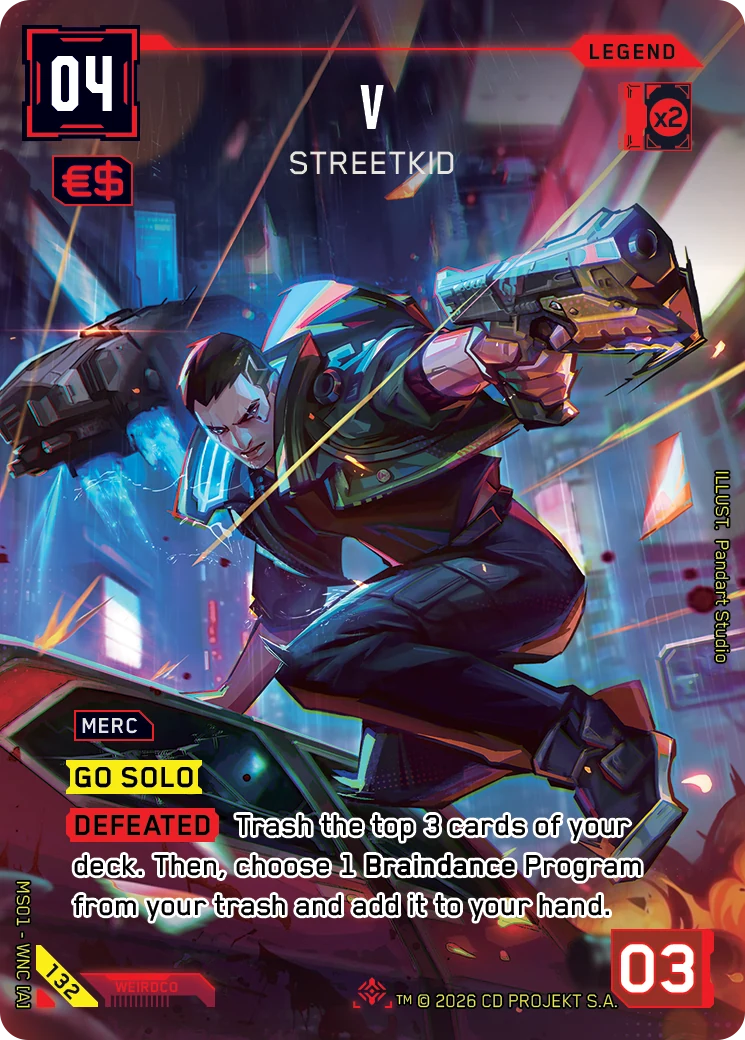
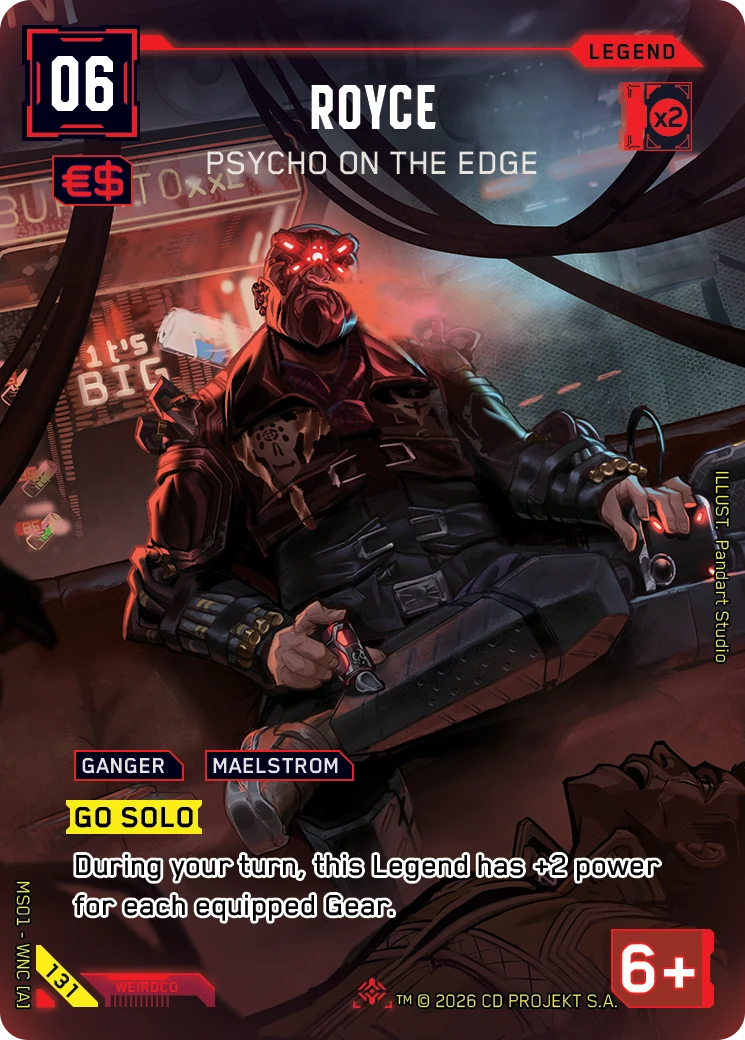
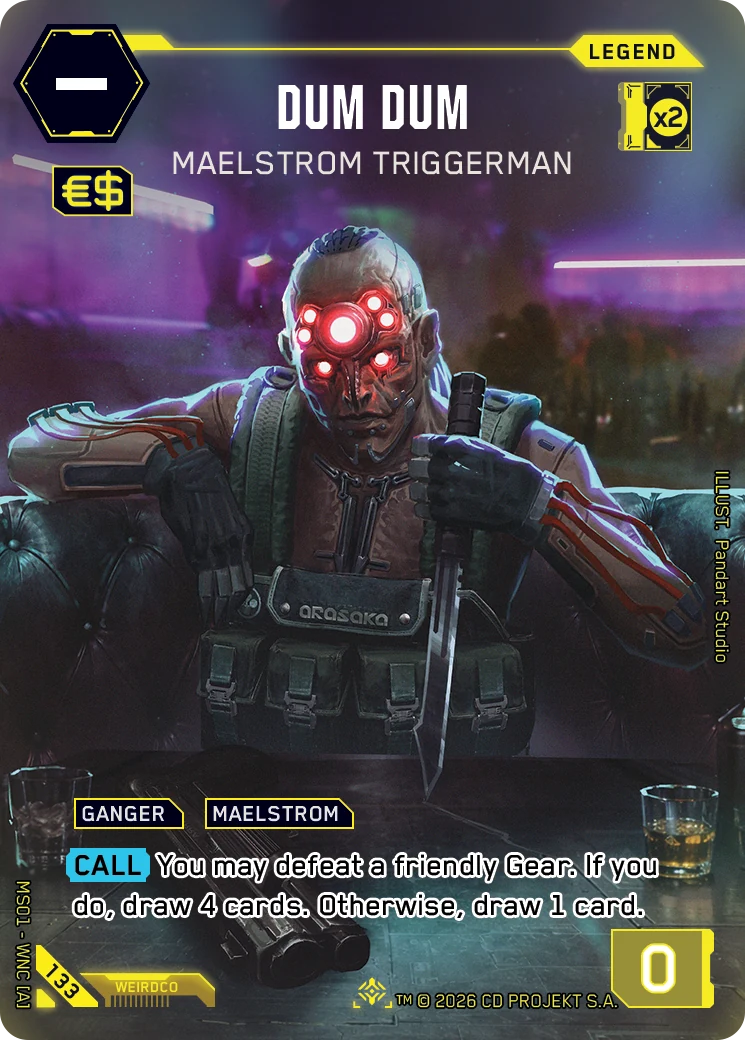
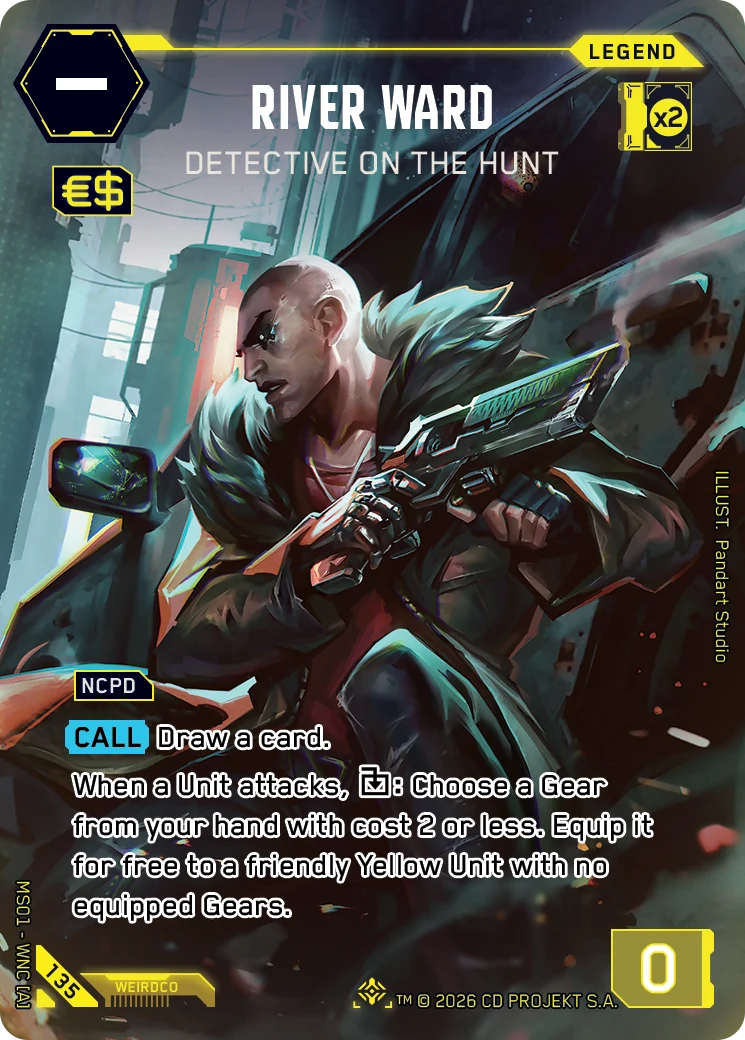
V Streetkid, Royce, Dum Dum, River Ward — four Epic Rares you’ll typically see multiple times in a Beta Display
What do I get per display?
Theory is nice. But what actually lands on the table when you crack a display box?
Beta Display: 36 packs for $169
The Beta Display is the Kickstarter version. 36 packs, $169 — or $4.69 per pack. Only available through Kickstarter, never at retail. „Beta“ refers to the exclusive Iconic Rares it contains — more on that in Block 4.
| Card type | Expected value | Realistic minimum | Realistic maximum |
|---|---|---|---|
| Rares (total) | ~54-58 | 45 | 72 |
| Epic Rares | ~9 | 4 | 16 |
| Secret Rares | ~1.5 | 0 | 4 |
| Iconic Rares | ~2 | 0 | 5 |
Nine Epic Rares on average — that sounds generous, and it is. With 12 different Epic Rares in the set, after one display you’ll have several duplicates and be far from having seen all of them. Coupon collector at work: the last two or three missing Epic Rares are disproportionately hard to get because you’re pulling duplicates over and over.
The 1.5 Secret Rares per Beta Display is the value that varies most wildly. If you’re unlucky you open a whole display without a Secret Rare — probability of that sits at around 22 percent. If you’re lucky you pull three or four.
Retail Display: 24 packs for $119.90
| Card type | Expected value | Realistic minimum | Realistic maximum |
|---|---|---|---|
| Rares (total) | ~36-40 | 30 | 48 |
| Epic Rares | ~6 | 2 | 12 |
| Secret Rares | ~1 | 0 | 3 |
| Iconic Rares | ~1.3 | 0 | 4 |
The Retail Display isn’t worse, just smaller. Per pack, the probability structure is identical — you get 24 packs instead of 36 for $119.90. Anyone doing the math notices: the Beta Display at $4.69 per pack is cheaper than Retail at $4.99 per pack, and it also delivers the exclusive Beta Iconic Rares. Those buying only retail pay a small premium and get the Retail Iconic variants instead.
Another stochastic reality check that expected values love to hide: what’s the chance a freshly-opened display contains zero premium hits?
Cyberpunk Retail Display (24 packs × 1:18 Iconic Rare): The cumulative binomial distribution gives P(at least 1 Iconic) = 1 − (17/18)²⁴ ≈ 74.6%. Flipped: roughly one in four Retail Displays contains zero Iconic Rares. That’s hard variance and a real frustration driver for single-display buyers.
Pokémon Booster Bundle (36 packs × 1:9 Illustration Rare, 2026): P(at least 1 IR) = 1 − (8/9)³⁶ ≈ 98.6%. Basically guaranteed. Even if you normalize sizes and use just 24 Pokémon packs, the chance of at least one IR still sits around 94%.
The Iconic Rare hunt at Cyberpunk is therefore considerably more variance-heavy than the IR hunt at Pokémon 2026 — a point the raw 1:18 rate hides on paper.
Three realistic scenarios
Pure averages feel abstract. Let’s look at three concrete buyer profiles to make the numbers stick.
Profile 1: The first-timer with one display. You’ve grabbed a Beta Display for $169 and maybe added a $30 Starter Deck. Roughly $200 total. Across 36 packs you’ll statistically open 45 to 55 Rares (covering 55 to 70 percent of the Rare print run), 8 to 10 Epic Rares, and with a 78 percent chance at least one Secret Rare. Iconic Rares are a bonus, not an expectation — statistically about two, realistically between zero and four. That’s enough to build a solid first deck, but no guarantee on the specific meta cards you might want.
Profile 2: The ambitious collector with four displays. Four Beta Displays at $169 each is $676 total, delivering 144 packs. Expected value: about 6 Secret Rares (likely all four unique Secret Rares plus a few duplicates), around 36 Epic Rares (multiple copies of each of the 12 Epic Rares), around 8 Iconic Rares (roughly a quarter of the 31 available alt-arts) and a complete Rare pool with extras for playsets. This is the zone where a complete set without Iconic Rare obsession becomes realistic — and where you start collecting duplicates for trades.
Profile 3: The Netrunner backer. Two displays, 72 packs, $349 plus shipping and tax, plus two Starter Decks. Statistically: ~3 Secret Rares, around 18 Epic Rares, roughly 4 Iconic Rares, and a decent Rare pool with some gaps on specific cards. That’s the entry tier for people who want to play and collect on the side without falling into completionist paranoia. Anyone wanting more should look at the Street Cred Pack ($499, 3 displays, 108 packs) as a step up — expected values there sit at ~27 Epic / ~4.5 Secret / ~6 Iconic Rares.
None of these scenarios guarantee you the Iconic Rares you actually want. If you’re hunting specifically for the Panam Iconic or the V Streetkid Iconic, plan to use the secondary market as your primary acquisition channel and treat packs as a bonus lottery. The math is brutally clear: cracking packs for a specific alt-art is statistical insanity, not strategy.
The complete set: what does it really cost?
This is where it gets honest — and a little painful. The coupon collector effect makes sure complete sets are never as simple as the overall rates suggest.
For the 32 Rares, two to three Beta Displays are statistically enough. That sounds manageable. For all 12 Epic Rares you’ll want closer to three or four displays — because of duplicates toward the end. The 4 Secret Rares are tricky: the overall rate is generous, but with only four cards in the category, you can easily pull one three times before you see all four. Estimate: 6 to 8 displays for a complete Secret Rare set if luck runs against you.
And the 31 Iconic Rares? Forget the 1:18 rate for a second and look at the per-card probability of 0.18 percent per pack. To statistically collect all 31, you’d need over 50 displays — which puts you north of $8,000 at Kickstarter prices. That’s obviously not a realistic goal, but a math exercise that shows the Iconic Rares are deliberately designed as long-term chase cards.
What do you get per pledge tier?
| Tier | Price | Packs | Avg Epic | Avg Secret | Avg Iconic |
|---|---|---|---|---|---|
| Quickhacks | $169 | 36 | ~9 | ~1.5 | ~2 |
| Netrunner Starter Kit | $349 | 72 | ~18 | ~3 | ~4 |
| Street Cred Pack | $499 | 108 | ~27 | ~4.5 | ~6 |
| Padre’s Blessing | $999 | 216 | ~54 | ~9 | ~12 |
| Afterlife Package | $2,799 | 648 | ~162 | ~27 | ~36 |
| Night City Legend | $7,999 | 1,944 | ~486 | ~81 | ~108 |
Night City Legend is the tier for people for whom $7,999 counts as a reasonable TCG spend. With 54 displays (1,944 packs) you theoretically have enough material to see every rarity multiple times — but the Iconic Rares remain a lottery even at this level.
The Iconic Rate of 1:18 sounds fair. Split across 31 different cards in the category, it becomes one of the hardest single-card hunts in TCG history. At 0.18% per pack for one specific Iconic, you statistically need 558 packs — over 15 Beta Displays.
Anyone wanting all 31 Beta Iconic Rares should plan for the secondary market rather than trusting their pack-pulling statistics. WeirdCo deliberately designed these cards as long-term hunt objects.
V and Royce — the kind of Epic Rares you see multiple times per display and still like
Iconic Rares — the real chase cards
On paper, 1:18 is a good rate. Better than Secret Rares, rarer than Epic Rares — sounds like a balanced middle ground. Reality is slightly more complicated and, depending on your perspective, either more frustrating or more fascinating than the number suggests.
Why 1:18 is completely misleading
Imagine someone tells you: „On average, you pull an Iconic Rare every 18 packs.“ That’s true. What they don’t tell you is this: there are 31 different Iconic Rares in the Beta version. The 1:18 rate refers to any Iconic, not a specific one.
For a specific Iconic Rare, you divide the 1:18 rate by 31 — and land at a hit probability of 0.18 percent per pack. Put another way: you statistically need to open 558 packs to pull one specific Beta Iconic at expected value. That’s roughly 15.5 Beta Displays at $169 each — over $2,600 for a single card.
That’s the expected value without any pity system or other mechanisms WeirdCo might have quietly built in (and hasn’t announced). Even if you say 500 packs gets you 90 percent certainty — that’s still over $2,300.
The real difficulty with Iconic Rares isn’t the 1:18 overall rate. It’s the fact that this rate is spread across 31 different cards.
The implicit design principle behind WeirdCo’s pull rates
Beta vs. Retail: two parallel universes
Here’s a mechanic that matters for collectors long-term: the Iconic Rares in Beta Displays are completely different cards than the ones in Retail Displays. WeirdCo confirmed that there are 31 Beta-exclusive and 31 Retail-exclusive Iconic Rares — 62 unique Iconic cards in total, split across two distribution channels.
If you missed the campaign, you’ll never pull the Beta Iconics from packs. Retail only delivers the Retail variants. That creates a permanent value wedge between the two versions — Beta Iconics will inevitably be more expensive on the secondary market, simply because the total production run is limited.
How wide the wedge gets depends on how many Kickstarter backers chose which tiers, and how much material flows into the secondary market versus staying with collectors. A precise forecast is impossible — but the structural conditions for permanently higher Beta Iconic prices are all there.
The three subcategories
Within the Iconic Rares there are three subgroups according to official statements, though WeirdCo hasn’t drawn the borders super precisely:
- Core Iconics: Alt-art versions of regular Unit, Program and Gear cards. Mechanically identical to their normal versions, visually upgraded.
- Legend Iconics: Alt-art versions of the Legend cards. „Most are Legends, but some will be other card types“ — the direct quote from an AMA leaves some room for interpretation.
- Secret Iconics: Alt-art versions of the four Secret Rares themselves. These are the rarest cards in the entire set — you’re combining Secret Rare base rarity with Iconic Rare per-card probability.
There are no confirmed numbers yet on the Secret Iconic individual rate within the Iconic category. If they’re evenly distributed, four Secret Iconics out of 31 would be about 13 percent of Iconic slots — and that’s already a tiny hit chance per pack.
Nova Rares: the FOMO system
Alongside the Iconic Rares there’s another „über-rarity“ that you can never pull from boosters: Nova Rares. These cards are only available as promos, tied to specific actions or stretch goals.
Three Nova Rares are known so far:
- Lucyna Kushinada: For newsletter subscribers who signed up before January 21, 2026
- David Martinez: Kickstarter stretch goal at $15 million
- Rebecca: Kickstarter stretch goal at $10 million

Lucyna Kushinada as a Nova Rare — only available through the newsletter, never pullable from boosters
That’s classic FOMO design: cards you missed are permanently only accessible via the secondary market. Lucyna Kushinada (from Cyberpunk Edgerunners, one of the series‘ most beloved characters) as a newsletter promo is a particularly clever pick — she appeals to both video game fans and anime fans of the Edgerunners series.
Whether Nova Rares will be gameplay-relevant or stay purely collectible is still open. WeirdCo hinted that all promos might also appear as regular cards in later sets — but stay exclusive and permanently limited in their Nova Rare versions.
What this means for the secondary market: if the game takes off and Lucyna is a gameplay-relevant card, her Nova Rare price will probably climb above every other card in the set. If she’s purely cosmetic, she stays a niche piece for completionists. For backers jumping in late: the stretch goal promos (David Martinez, Rebecca) were tied to the campaign. What you don’t have and didn’t earn will cost a premium on the secondary market later.
The big comparison: what other TCGs do — and why Cyberpunk thinks differently
To really place the Cyberpunk TCG, you have to look at what the big players are up to. And it gets interesting — because the philosophy behind pull rates isn’t a technical detail. It tells you everything about what a publisher expects from its players.
Should the game be played? Or collected? Or both — and in what ratio? Publishers don’t answer these questions in press releases. They answer them in probabilities.
Pokémon: The rollercoaster model
Pokémon is the best-selling card game in the world, and that has little to do with competitive depth. Pokémon lives off the collecting impulse, off childhood nostalgia, off the influencer cracking a box and screaming about the SIR. Game design is secondary — what matters is the chase.
Important for a fair comparison: The Pokémon Company has actually responded to community criticism in recent years and meaningfully improved several rates. The two current Mega Evolution-era sets — Ascended Heroes (released January 30, 2026) and Perfect Order (released March/April 2026) — paint a very different picture from the notorious late-2024 Surging Sparks rates.
Current 2026 rates from empirical tracker data (Ultima Supply, TCGPlayer samples):
- Double Rare (RR): about 1 in 5 packs (~20.9%)
- Ultra Rare: about 1 in 12 packs
- Illustration Rare (IR): 1 in 9 packs
- Special Illustration Rare (SIR): 1 in 72–81 packs (Perfect Order), 1 in 67–91 packs (Ascended Heroes)
- Mega Hyper Rare: 1 in 1,786 packs (Perfect Order), 1 in 540 packs (Ascended Heroes — a major improvement over earlier generations)
This isn’t the Surging Sparks horror anymore, where Hyper Rares sat at 1:188 and a single card cost around $846 in packs statistically. The Mega Evolution sets made the popular alt-art categories much more accessible, while the absolute top cards (Gold Mega Zygarde ex at 1:1,786) of course still remain a lottery.
For a 36-pack booster bundle at roughly $160 (~$4.44 per pack), that works out to: statistically 4 Double Rares, 3 Ultra Rares, 4 IRs, and a roughly coin-flip chance at a SIR. For the mid-popular collector hit — the IR — that’s genuinely fair. For the absolute chase (Mega Hyper Rare), obviously not; we’re talking $700 to $2,500 per statistical card.
For collectors that means: the hunt is part of the experience, but less brutal than two years ago. For players: the meta-relevant cards are accessible through other means. For investors: Mega Hyper Rares stay scarce enough for value stability — as long as the game stays relevant.
The second axis: Alt-art versus alt-art
Anyone reading a pull rate comparison should ask one question the rest of the TCG scene loves to skip: what are you actually comparing? The rarest tier in set A against the rarest tier in set B is a valid axis. But if the two tiers have nothing to do with each other conceptually, the comparison only tells half the truth.
Concretely: the Cyberpunk Secret Rare (4 cards in the set, 1:24 per pack) is the „rarest regular hit“. The Pokémon Mega Hyper Rare (2 to 5 cards per set, 1:540 to 1:1,786) as well. That axis is in the big table above, and Cyberpunk clearly wins it — by factors of 8 to 10 in some cases.
But there’s a second axis that says just as much about fairness: visual-concept equivalence. The Iconic Rares in the Cyberpunk TCG are character-based alt-art versions of existing cards — 31 of them in the Beta version, prominent figures like V, Panam, Jackie Welles, Lucyna in elaborately illustrated alternate versions. That’s conceptually exactly what Pokémon offers as Illustration Rare (IR): alternate, full-art works of prominent Pokémon and Trainers, a standard feature of product architecture since the Scarlet & Violet era.
When you compare those two categories head-to-head, the fairness picture flips:
| Alt-art category | Pull rate | ~Cost per any-card |
|---|---|---|
| Cyberpunk Iconic Rare | 1 in 18 packs (~5.56%) | ~$89 |
| Pokémon Illustration Rare (2026) | 1 in 9 packs (~11.11%) | ~$40 |
Pokémon is exactly twice as generous on this axis. Per any character-based alt-art, you pay about $40 in packs at Pokémon 2026 versus about $89 at Cyberpunk. If you’re hunting for a specific card, the gap gets even worse, because Pokémon typically runs 8 to 12 Illustration Rares per set while Cyberpunk has 31 different Iconic Rares in the first set. Coupon-collector fragmentation hits twice here: lower base probability AND more different cards to complete.
Why bring this up only now? Because the honest answer to „is Cyberpunk fairer than Pokémon“ is a qualified yes-and-no. On the axis of „rarest single card in the standard product“ — clearly fairer, in fact extremely fairer. On the axis of „character-based alt-art as a collector moment“ — Pokémon leads by a factor of two. Which criterion matters more to you decides which TCG’s fairness argument lands better.
Magic: The Gathering — the old hand who knows what he’s doing
MTG has, after thirty years of experience, found a model that works: the Play Booster. Introduced in 2024, it replaces both Draft and Set Boosters and contains 14 cards per pack. One is guaranteed Rare or Mythic — and through wildcard slots there can even be multiple.
The Mythic rate lands at around 14.3 percent. Anyone cracking a 36-box pulls about five Mythics statistically. That’s fair. That’s accessible. That’s design with the idea that people actually want to use the cards.
MTG gets one thing consistently right: the strongest cards are expensive, but reachable. No player has to crack hundreds of packs to be competitive — they can just buy the cards. Targeted. Like an adult.
The philosophy behind Magic’s secondary market
But that also means: Mythics aren’t real „chase cards“ in the Pokémon sense. They’re expensive playing cards, rare enough to have value, common enough not to be unreachable. The real chase comes from special products — serialized cards, 1-of-1 rarities in Collector Boosters. But the base product stays fair.
For boxes: a 36-pack costs between $110 and $160 depending on the set. For five Mythics. If you need specific Mythics, you buy them as singles — and in MTG that’s socially completely accepted, in fact the recommended way.
One Piece: the Japanese lottery model on steroids
One Piece TCG plays a completely different game. The product here is strictly structured: 12 cards per pack, 24 packs per box, 12 boxes per case. Per box you statistically get four to five Super Rares and maybe one Secret Rare — at a rate of 1 in 48 to 72 packs.
That’s still manageable. And then there are the Manga Rares.
Manga Rares are so rare that reliable sources report under one per case — under one in 288 packs. That makes the rate under 0.35 percent. Anyone wanting to pull a Manga Rare from packs needs an average of over 12 boxes. At case prices: easily over $1,400.
One Piece TCG is a phenomenon in Japan and has exploded worldwide. Bandai recognized: in the Japanese collecting market, extreme rarity is a feature, not a bug. The chase is the product. The card is proof that you made it. Combined with a massive IP (the manga has been running since 1997), this gives you an audience willing to pay — and pay, and pay again.
For Western players coming from the MTG side, it’s often a shock. Opening a booster display here is essentially buying an expensive ticket in a raffle where the jackpot is a card. Secondary market prices for top Manga Rares climb into four digits, which keeps the whole cycle running.
Gameplay-wise One Piece is actually solid, by the way. Anyone wanting to play competitively buys singles from TCGPlayer or Cardmarket. Pack opening in One Piece is pure entertainment and isn’t aimed at delivering your deck at all.
Dragon Ball Super Fusion World: SCR or nothing
Bandai runs the same model at Dragon Ball Super Fusion World, but with its own twist: the rarity tiers are designed so that the vast majority of players will never hold an SCR Star in their hand.
Per box you get five SR and two SPR. That’s fair. The bread-and-butter rarities are accessible. But the SCR — Special Collector Rare — drops to 1 in 144 packs. Per case two are guaranteed, but that’s still 144 packs, twelve boxes, a pile of money. Roughly $720 for a statistical SCR from packs.
The SCR Star takes it even further. At a rate of 0.002 percent it’s so rare that Bandai probably never officially confirms the number — you know it from community tracking over tens of thousands of opened packs. These cards exist. But they’re only accessible to normal humans via the secondary market.
What makes Dragon Ball interesting: the game system is built for actual competitive play, and SCRs are strong but not strictly necessary. So there’s a real line between „I can play“ and „I have unlimited money“. Pokémon is missing that line entirely.
Flesh and Blood: the transparent neighbor
Legend Story Studios has been playing a different game since 2019, and on purpose. Flesh and Blood is the only major TCG that communicates its pull rates completely openly, including the exact distribution within rarity slots. Rares appear in three out of four packs, Majestics at one in six, Legendarys at one in 24, Fabled cards at one in 96, and Marvels — the actual chase cards — at around 1:384.
At first glance that’s not wildly generous. Marvels are much rarer than Cyberpunk’s Secret Rares. But Flesh and Blood does something clever: the game system doesn’t need Marvels to be competitive. Legendarys cover the competitive core, Marvels are additional collectibles. Players invest in Legendarys and Fabled. Collectors hunt Marvels.
Cyberpunk and Flesh and Blood share a core philosophy at the rarity level: gameplay relevance is separated from pure collecting rarity. While Pokémon and One Piece deliberately tie their rarest cards to gameplay value (so the hunt catches players too), WeirdCo and LSS draw a clean line.
In fairness, it has to be said: the clean line at the rarity level is the good part of the FaB approach. The less-good part is that competitive FaB decks are still expensive. Legendary-heavy top-tier lists regularly climb to $300-500 because multiple specific Legendarys have to be run as playsets. This has been an ongoing Flesh and Blood community discussion for years. So saying „Cyberpunk and FaB get pull rates right“ has to be paired honestly with „and both still have work to do on the cost of actually playing.“ How expensive a top-meta Cyberpunk deck will end up is something we’ll only know after release — the structure (2 Rare-plus slots per pack, fair Epic Rare rate) gives reason for cautious optimism, not a guarantee.
Where LSS outperforms WeirdCo, though: transparency. Exact drop rates are communicated before each set, slot mechanics are publicly documented, community trackers deliver continuous empirical data. WeirdCo could take this transparency as a blueprint — it’s an easy reputation win, and it costs nothing.
Disney Lorcana: the attempt at a middle path
Lorcana is the most interesting newcomer of the last few years — and got plenty right that the Cyberpunk TCG is now also trying. Each pack contains 12 cards with two Rares or higher and a guaranteed foil. A 24-pack box statistically delivers 13 Super Rares and four to five Legendarys. That’s generous.
The actual chase is the Enchanted cards — completely redrawn, shiny alternate versions of existing cards. Rarity: 1 in 64 to 96 packs. That means: one per 2.5 to 4 boxes. Roughly $400 product investment per statistically guaranteed Enchanted.
Lorcana understood: you need a chase for the collectors, but you can’t break the game for the players. The Enchanteds are beautiful — but none of them is mechanically essential.
The Lorcana philosophy in practice
That’s smart. Lorcana cleanly separates collectible product from gameplay-relevant power. Anyone wanting to play competitively needs Legendarys — which are easily reachable from packs. Anyone wanting all Enchanteds either invests deeply in boxes or buys on the secondary market.
Ravensburger had rocky beginnings though: supply bottlenecks, secondary market explosions, community frustration. The good bone structure of the product has survived anyway.
The table that says it all
Now the direct comparison on the toughest benchmark: what does it cost to statistically pull the rarest regular card from packs?
| TCG | Rarest tier | Rate/pack | Packs for 1 | Boxes for 1 | Cost (~$) |
|---|---|---|---|---|---|
| Pokémon (Surging Sparks) | Hyper Rare | 0.53% | ~188 | ~5.2 | ~$846 |
| MTG (Play Booster) | Mythic Rare | 14.3% | ~7 | <1 | ~$35 |
| One Piece TCG | Manga Rare | <0.5% | >288 | >12 | >$1,440 |
| Dragon Ball FW | SCR | 0.7% | ~144 | ~6 | ~$720 |
| Disney Lorcana | Enchanted | 1–1.6% | 64–96 | 2.5–4 | ~$400 |
| Cyberpunk TCG | Secret Rare | 4.17% | ~24 | <1 | ~$120 |
Secret Rare as the entry point: Cyberpunk lands at $120 for a statistical Secret Rare from packs — at a Beta box price of about $169. Less than one box for the most common chase. That’s a different league from Pokémon or One Piece.
Quick sanity check, because the number looks too good at first glance: yes, the 14.3 percent Mythic rate in Play Boosters is real, and yes, seven packs at around $5 works out to roughly $35 per any Mythic Rare. The catch: with 20 to 25 Mythic Rares per MTG set, a specific Mythic statistically takes around 140 to 175 packs — that works out to $700 to $875 for the card you actually want. Which is exactly why practically nobody targets specific Mythics from Play Boosters. The real chase in MTG has been in Collector Boosters for years — Serialized Cards at 1:500 or rarer, Special Guests, Textless Foils. Collector packs run $25-40 each, and the hardest chase cards climb into Pokémon Hyper Rare territory or worse. The table above deliberately uses the standard product Mythic, because that’s the base comparison across all the TCGs. The point still holds: MTG is consistently fair at its entry rarity, and the Cyberpunk TCG positions itself close to this MTG philosophy for its standard product.
The point behind the whole table: what you pay to pull any card of the rarest booster tier is only half the story. The other half is how many different cards exist in that tier. Pokémon typically has eight to twelve Hyper Rares, One Piece five to ten Manga Rares, Lorcana roughly twelve Enchanteds, Cyberpunk just four Secret Rares. A low card count makes targeted hunting more expensive per card, but it also makes the complete set more reachable. Those four Cyberpunk Secret Rares cost you, on average, six to eight displays for the complete set — which is nothing compared to what a full Hyper Rare set would run in Pokémon.
Anyone wanting to compare and maybe get into other TCGs: Pokémon booster boxes on Amazon are available for various sets (ships internationally from Amazon Germany) — a direct comparison with your own hands makes the rarity differences more tangible than any table. One Piece displays are listed as well, if you want to experience the lottery feeling firsthand.
Why are the differences so big?
The answer lies in corporate philosophy and target audience priority.
Pokémon, One Piece, and Dragon Ball primarily serve collectors and the collecting impulse. The game is a carrier — important, but not the main driver. What makes these games expensive: the community measures value in rarity. The harder a card is to pull, the more it means to have it. That’s psychologically deep-rooted and brilliantly exploited for marketing.
MTG and — with some caveats — Cyberpunk think differently. Here the game is the product. The cards are meant to be played. Having the best player at the table not automatically be the one with the deepest pockets is a feature, not a bug. The rates are fair because unfair rates drive players away — and players are the foundation.
That doesn’t exclude collectible value. MTG proved with serializations and Collector Boosters that you can have both: accessibility in the base product, lottery feeling as opt-in in the premium segment. Cyberpunk does something similar with the Iconic Rares.
The caveat: Cyberpunk is new. Pokémon had more than fifteen years to keep tightening the rarity screw, because a massive, loyal community was willing to go along. What WeirdCo sets as its starting pull rates isn’t an eternal contract. Once the game grows and the fan base is locked in, these rates can change. History gives everyone reason to stay watchful.
What this actually means — for you
Numbers in comparison are nice. But at some point you want to know: what do I concretely have to spend? Is one box enough? Can I play competitively without ruining myself? Is it worth it as an investment?
You want to play the game
The Cyberpunk TCG comes with 140 unique cards in the set. Two Rare slots per pack means: in the 36 packs of a Beta box you statistically pull 72 Rare-or-higher cards. With 32 different Rares in the set, the probability of having most Commons and Uncommons complete after one display and a solid Rare pool is very high.
A competitive deck will run 40 to 50 cards, plus three Legends. For the Rare slots in the deck you need playsets — so at least two, probably three copies of the most important cards.
Realistic estimate: a Starter Deck (around $25 to $30) plus one display ($169 for the KS Beta box, retail prices TBD) should be enough for a first competitive deck. Epic Rares drop at 1 in 4 packs — so nine statistically across 36 packs. If luck runs bad you get duplicates, if it runs good you hit exactly the right ones. But as a baseline: Epic Rares aren’t out of reach.
1 Starter Deck + 1 Beta Display = roughly $194 invested. For that you statistically get: full Common/Uncommon base, ~50% of the Rares, 8-9 Epic Rares, 1-2 Secret Rares. For a competitive deck that’s a realistic start — without a guarantee on meta-optimized cards, but with a solid foundation. Two displays: roughly $363, and the Rare pool is almost complete.
For comparison: an MTG top-tier Standard deck costs between $200 and $600 on the secondary market. Anyone trying to pull those cards from packs needs more. Cyberpunk is fairer in this sense — if luck cooperates. And „luck on two Rare-plus slots“ is structurally better than „luck on one Rare-plus slot“.
You want to collect
This is where it gets more complicated. All 140 unique cards complete from packs — purely by the math, you need three to four displays for a full Rare/Epic coverage. At Beta KS prices: $507 to $676. That’s the entry price to completeness without the rarer rarities.
Secret Rares on top — with 4 different in the set: statistically you need 6-8 displays for a complete Secret Rare set. Four Beta boxes, around $676. With bad luck, more.
And then there are the Iconic Rares. 31 different Beta-exclusive alt-art cards at a rate of 1:18 per pack. Realistically speaking, a complete Iconic Rare set from Beta packs is a multi-display project — or you hit the secondary market.
Iconic Rares and Nova Rares are WeirdCo’s clever play: the cards are rare enough to carry value, but not so rare they feel unreachable. They give hardcore collectors a target — and investors an anchor.
The rarity design in the Cyberpunk TCG
Anyone wanting every variant of every card — regular, Iconic, the various Beta exclusives — should forget the pack route. That’s a collector’s journey that runs through the secondary market. And that’s fine, too.
You want to invest
High pull rates mean high supply on the secondary market. Anyone betting that Secret Rares will climb to $200-$300 like rare Pokémon cards should run the math: at 4.17 percent pull rate and Kickstarter volume of over $15 million, a lot of product is in circulation. A lot of product means more Secret Rares in circulation. Secret Rares will probably not hit triple-digit prices — more like double-digit, depending on the gameplay relevance of the card.
Where the investment potential sits: Iconic Rares and Nova Rares. The Beta Exclusives. Limited Kickstarter goodies. These are the cards that stay structurally scarce — not because the rate is bad, but because the product itself is limited. Beta boxes won’t be produced again after KS fulfillment. What comes out of these boxes is finite.
Add the IP factor: Cyberpunk 2077 as a worldbuilding foundation is one of the strongest IPs in gaming. CD Projekt Red, WeirdCo, an active fan community. If the game is still on tournament tables two years from now and the second set is out, Beta cards will retroactively look like Alpha cards in MTG. That’s speculative — but not irrational speculation.
The risk: pull rates designed too fairly can throttle collector value. If everyone pulls their Secret Rares from two displays, there’s not much scarcity pressure. WeirdCo has to watch that accessibility doesn’t kill value. The balance between „everyone can play“ and „some cards are really special“ is delicate. So far, the Iconic Rares look like the right answer.
What WeirdCo gets right — and where the risks are
After all the number diving, a step back is worth it.
The Cyberpunk TCG is, at least on paper and based on KS data, the most collector-friendly of the big TCG debuts of recent years. Two guaranteed „Rare or Better“ slots per pack — no other major TCG does that in its standard product. The Secret Rare rate of under one per box on average is generous to the point of pain. Epic Rares function here not as unreachable trophy cards but as actual playing cards that will regularly land in decks.
WeirdCo makes a statement with this structure: they want people to actually play the game, and not give up frustrated after ten boxes because the hunt for base rarities drags on. In an industry that’s been marching in the opposite direction for years, that’s a remarkably confident decision.
The Iconic Rare system creates collectible value for the hardcore clientele in parallel, without getting in the players‘ way. The Beta Exclusives are permanently limited and structurally scarce, making them the anchor point for anyone smelling an investment opportunity here. And the actual game system stays the reason people stick around after the Kickstarter wave.
The risk is out in the open. Too much accessibility can mean: the secondary market stays flat, the investment story doesn’t land, hardcore collectors lose interest. Pokémon tightened the rarity screw for years — and the community went along because the IP was strong enough. Cyberpunk has the potential to do the same. Whether WeirdCo wants to go that way — or sticks with the accessibility philosophy — will show in the next sets.
The next real data point arrives with the retail launch in October 2026. Then we’ll know how the 24-pack Retail Boxes feel in practice, how the secondary market reacts, and whether the Beta pull rates are representative for the long-term product.
The honest verdict: the Cyberpunk TCG does a lot right, but not everything. The single rarest card in the set — the Secret Rare at 1:24 — is genuinely more accessible than at the established competitors. The character-based alt-arts aren’t. Pokémon improved its Illustration Rates in 2026 and sits at exactly twice as generous per pack (1:9). For players who want to play the game and build competitive decks, Cyberpunk is the fairer option. For collectors hunting specific character artworks, Pokémon is the cheaper route. Both statements are simultaneously true, and anyone pitting them against each other hasn’t thought the comparison through.
Night City is waiting — eyes open.
FAQ — The most common questions about the pull rates
Is the Cyberpunk TCG really fairer than Pokémon?
The honest answer is: it depends on what you compare. On the axis of „rarest regular card in the standard product“ the Cyberpunk TCG with its Secret Rare at 1:24 is genuinely more generous than Pokémon with its Mega Hyper Rares at 1:540 to 1:1,786 in the current 2026 sets. On the axis of „character-based alt-arts“ — Cyberpunk Iconic Rare (1:18) versus Pokémon Illustration Rare (1:9 in Perfect Order and Ascended Heroes) — Pokémon is exactly twice as generous. Cyberpunk wins on the pure rarity of the top tier; Pokémon wins on the frequency of the popular alt-arts. Which criterion matters more to you decides which TCG is fairer for your needs.
Are the pull rates officially confirmed or just estimates?
Officially confirmed by WeirdCo via Kickstarter Update #25 on April 9, 2026. The listed rates (Epic 1:4, Secret 1:24, Iconic 1:18) are manufacturer figures. Actual empirical data from community tracking doesn’t exist yet, because the set only drops at retail in Fall 2026 and the Kickstarter fulfillment runs in parallel. Historically, empirical rates often deviate slightly from manufacturer figures, usually to the buyer’s disadvantage. Wait and recalculate when the data comes in.
Can I build a competitive deck from a single display?
Very likely yes, as long as your meta preferences aren’t locked to a specific combination of three particular Epic Rares. With 36 packs in a Beta Display you statistically get 8 to 10 Epic Rares, which at 12 different Epic Rares in the set means around 60 to 70 percent coverage. Plus 45 to 55 Rares, which also covers most of the 32 available Rares. Throw in a Starter Deck and you have a solid base. Tournament-level competitive play comes later, and for that you buy singles.
Why do Iconic Rares cost so many more packs than Secret Rares when the overall rate is similar?
Because the 1:18 Iconic rate is spread across 31 different cards, while the 1:24 Secret rate covers only four cards. Per desired single card that gives you about 0.18 percent per pack for Iconics versus 1.04 percent for Secret Rares. The math is counterintuitive but clear: rarity isn’t just a function of the overall rate but also of the number of different cards in the category.
Is the Night City Legend pledge worth it from a pure pull rate perspective?
Mathematically, no, if completion is your goal. 54 displays at $7,999 statistically delivers about 108 Iconic Rares, which by the coupon collector principle isn’t even enough to collect all 31 Beta Iconics. Expect around 25 to 28 different ones, not all 31. The pledge justifies itself more through the exclusive extras (metal cards, limited accessories, Kickstarter perks) than through pure pack math. For pure completionism, the secondary market is the more rational route.
Will pull rates change in later sets?
Nobody knows. Historically, almost every TCG has eventually tightened the rarity screw, either to make the secondary market more interesting or to introduce new chase mechanics. WeirdCo hasn’t communicated any formal commitment to constant pull rates. Anyone betting on permanent generosity should keep that in mind. The Beta exclusivity and structural scarcity of the first print run stays intact regardless.
Are the Nova Rares pay-to-win?
Unclear. WeirdCo hasn’t explicitly addressed the gameplay relevance of Lucyna, David Martinez, and Rebecca yet. From the cards available so far they look like special alt-arts or slightly stronger variants of existing cards — not uniquely powerful cards that enable completely new archetypes. If that changes, we have a real balance problem, because the cards would be permanently only accessible via the secondary market. For now: wait and watch.
Sources
- Kickstarter Update #25 — WeirdCo, April 9, 2026
- Reddit AMA — cyberpunktcg.gg
- Official card database — cyberpunktcg.com
- CardShopLive — Pokémon Pull Rates (Scarlet & Violet)
- TCGPlayer — secondary market prices & pull rate analyses
- Draftsim — MTG Play Booster guide
- CardCosmos — One Piece TCG Pull Rates
- Neokyo — Dragon Ball Super Fusion World Rarity Guide
- DigitalTQ — Disney Lorcana Pull Rates
- PCGamesN — Cyberpunk TCG Alpha Kit Review
April 10, 2026 — First publication.
April 10, 2026 (Update 1) — Comprehensively revised after community feedback and a detailed research review:
- Pledge tier table corrected: The Netrunner Starter Kit contains 2 displays / 72 packs ($349), not 3 displays / 108 packs. The previous Netrunner numbers were actually the Street Cred Pack’s ($499, 3 displays / 108 packs) — a classic mix-up. Street Cred and Afterlife Package now have their own rows, all expected values recalculated. Thanks to VOID1355 (Tomek) and Julz266 [CTCG] for catching it.
- Pokémon baseline updated: The first version used Surging Sparks (late 2024) as the Pokémon comparison point. For a fairer comparison, the current 2026 sets Perfect Order (March/April 2026) and Ascended Heroes (January 30, 2026) are more relevant. Fully rewritten accordingly.
- Alt-art equivalence axis added: A research review rightly pointed out that Cyberpunk Iconic Rares are the conceptual counterpart of Pokémon Illustration Rares (both character-based alt-arts). On that axis, Pokémon 2026 is exactly twice as generous. New dedicated section added, verdict nuanced accordingly.
- Dead-box variance made explicit: Binomial analysis for „how likely is zero Iconic Rares in a Retail Display“ added as its own infobox.
- Flesh and Blood section rewritten: The original version glossed over FaB’s own $300-500 deck-cost reputation. Now addressed honestly. Thanks to Sani#2341 for the very valid point.
- Table readability improved: Column-header contrast sharpened via CSS overrides. Thanks to Julz266 [CTCG].
- „Hit slot“ terminology converted throughout to „Rare or Better“ slot to avoid marketing-speak framing.
- FAQ and verdict reframed: Instead of an implicit „Cyberpunk is fairer“ answer, the honest version: Cyberpunk wins on the rarest single card in the standard product, Pokémon 2026 wins on character-based alt-arts. Which criterion matters more to you decides which TCG is fairer for your needs.
If you spot further errors or can sharpen the analysis, reach out via the contact page or the community Discord. Deep dives here are developed publicly — critical reading is part of the process, not a problem with it.