This is the English edition of a deep-dive originally written in German. The analysis, math, and editorial voice are ours — the translation was produced with AI assistance and reviewed by a human editor. If you spot an inaccuracy or an awkward phrasing, let us know via the site contact page. The original German version is linked at the top of every article.
- The Kickstarter effect: democratization and flood
- The speculator problem: who’s behind the numbers?
- The MMO problem: why millions aren’t enough
- Altered: dissecting a failure
- MetaZoo: when a founder kills his own game
- The survivors: what Sorcery and Grand Archive get right
- IP power is not a free pass
- $15 million and a dream: the Cyberpunk TCG under the microscope
- Gig Dice: stroke of genius or gimmick?
- 2027 will be the year of reckoning
- My personal take
On March 19, 2026, Equinox sent a statement to its community. No fanfare, no drama — just that one cold sentence: „The numbers simply aren’t there.“ And with that, Altered TCG was dead. Six-point-seven million dollars raised on Kickstarter, an innovative system, a retail launch, a passionate fanbase — and still: shutdown after 18 months. Every backer refunded. Digital platform closing at the end of May. Card list going open source on GitHub.
I sat in front of my screen that evening and thought: great. Another one.
Not the first. Not the last. The Kickstarter TCG graveyard keeps filling up, and every headstone reads the same way: big launch, enthusiastic community, great promises — and then silence. What’s left behind is unpaid tournament prize pools, orphaned Discords, and cards that no event organizer will ever list again.
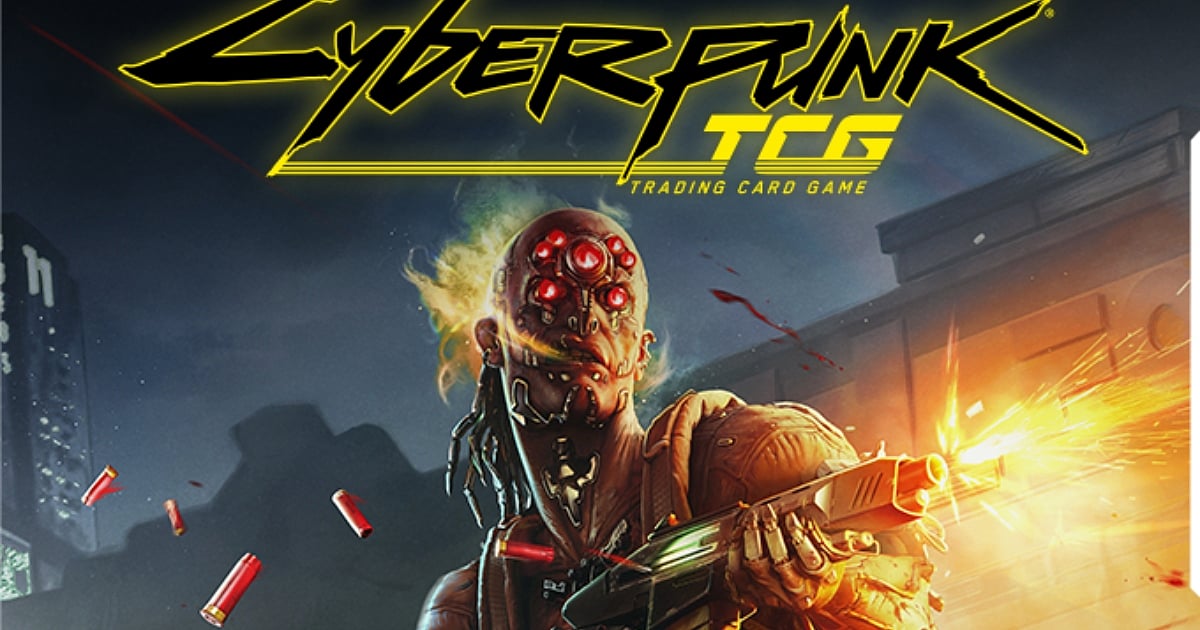
Meanwhile, the biggest Kickstarter campaign a tabletop game has ever seen is running right now. Fifteen-point-four million dollars. Over 21,000 backers. The Cyberpunk TCG from WeirdCo. My cards are in there too — I backed the Night City Legend tier, which ended up costing me more than a used car with heated seats. So I’m not neutral. I’ve got skin in the game.
And that’s exactly why I want to answer this question honestly: what actually kills a Kickstarter TCG? And does the Cyberpunk TCG have a fair shot at escaping the graveyard?
To get there we’re going to look at the dead, the survivors, the market mechanics behind all of it — and finally at the patient that’s just been born and whose odds of surviving its first year nobody really knows yet.
The Kickstarter effect: democratization and flood
Before Kickstarter, things were simple. A TCG needed a publisher, a distribution network, printing capacity, and a marketing budget that normal people can’t really picture. Those filters killed most ideas before they ever saw a prototype. That was harsh — but it had an upside people sometimes forget: it also kept underfunded projects off the market that had no chance of surviving from day one.
Kickstarter removed that filter. Anyone with an idea and a convincing pitch can now fund a TCG launch. That’s democratic, inspiring, and in many cases genuinely wonderful — Grand Archive got started this way, Sorcery: Contested Realm got started this way. But the same mechanism also brought projects to market whose teams never had the resources for long-term operation, and who may not have known it themselves.
Look at the numbers that have rolled through the crowdfunding scene over the last few years and the gradient becomes obvious fast. MetaZoo launched with $18,249 and just 255 backers — and still grew into a serious phenomenon through social-media hype. Nostalgix pulled in $935,000 from 2,067 backers, Elestrals $1.47 million from over 7,500 supporters, Grand Archive $947,000 from 1,539 backers. Sorcery: Contested Realm hit NZ$5.8 million (roughly $3.5 million USD) from 6,456 backers. Altered cleared $6.7 million with 14,997 backers, and now the Cyberpunk TCG is sitting at $15.4 million with 21,431 backers — with the campaign still running until April 18, 2026, so the final number is likely higher.
That looks like a success story for the crowdfunding model. Every one of those launches was a funding success. Kickstarter works — as a launchpad. The problem comes afterward.
The global TCG market is estimated at somewhere between $8.4 and $14.7 billion a year (depending on how you define it and whether you count collector-only cards without game components), with projected annual growth of just under 7% through 2035, when the market should sit at $16.9 billion. Sounds like plenty of room for everyone. But if you pull up the TCGplayer bestseller lists for Q4 2025, they tell a different story.
Top ten, in order: Magic: The Gathering, Pokémon, One Piece Card Game (up from fourth), Yu-Gi-Oh! (down from third), Riftbound as the only real newcomer at number five, Disney Lorcana at six (down from third), Pokémon Japan, Gundam Card Game, Digimon Card Game, and Star Wars: Unlimited at ten. Magic and Pokémon combined probably hold more than 60% of the market. The remaining eight slots go to established franchises with billion-dollar parent companies behind them. What’s left over for every new, independent game combined is maybe a slice of 5 to 10% — which they have to share with dozens of competitors.
That’s the market a Kickstarter TCG gets born into. And that’s the market it has to survive in after the backer euphoria fades — against games whose marketing budgets alone are bigger than the entire Kickstarter haul of a Sorcery or a Grand Archive.
One point the market data tends to bury: Riftbound. Straight into the number-five spot at TCGplayer, out of nowhere. That shows the market isn’t completely sealed shut against newcomers. It also shows how rarely it happens. Riftbound is the exception, and nobody has yet offered a convincing explanation for why it worked where so many others failed. A single data point doesn’t make a trend.
The speculator problem: who’s behind the numbers?
Here’s where it gets uncomfortable. Because the answer to „how strong is the actual support for this game?“ almost never looks the way the Kickstarter numbers suggest.
Pine Island Games ran an analysis of funding curves on recent TCG Kickstarters and identified a pattern: a strong start, then steady decline — an L-shaped curve. Older Kickstarters for games that actually worked tended to show a U-shape: strong start, a dip in the middle, strong closing sprint. The L-curve is not the signature of a healthy backer mix of passionate players. It’s the fingerprint of speculative backing. Early-bird bargain hunters jump in early, grab the cheapest tiers, and once the hype cools off, barely any new support comes in. Pine Island Games summed it up with a warning every backer should tape to their monitor: „Most TCGs will not retain long term value.“
On the Cyberpunk TCG, the average pledge sits at around $719. That’s noticeably high for a card game — for comparison: Grand Archive at $947,000 and 1,539 backers averaged about $616, Altered at $6.7 million and 14,997 backers just $449. What does that tell us? Either the Cyberpunk TCG has an unusually passionate fanbase willing to dig deep, or there’s a disproportionately high share of premium pledges from collectors and speculators. Probably a mix of both, but which direction the needle leans is the decisive question.
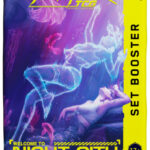
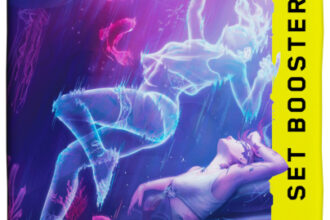
A look at the pledge tiers helps put that in context. The cheapest entry, Common Cyberdecks at $49, gets you two starter decks — that’s pure player territory. Quickhacks at $169 includes a booster box. Then there’s the Netrunner Starter Kit (two starter decks, two Beta booster boxes, one Beta box), the Street Cred Pack (three Beta booster boxes, two starter decks, premium dice, a Beta box), and way up at the top the Night City Legend tier for $7,999, which includes 8 starter decks, 54 Beta displays, premium dice, metal cards, CGC pre-graded cards, and uncut sheets.
The Night City Legend tier is honestly not a player’s package. It’s a collector-and-investor package. I backed it because I’m a fan and I love this universe, but I’d be lying if I said investment thinking wasn’t part of the calculation. 54 Beta displays is enough to open a small store. CGC pre-graded cards are a collector-market product. Uncut sheets are pure collectibles. That’s not a secret and it’s not an accusation — that’s just the reality of premium TCG launches. WeirdCo offers these tiers because the demand is there, and the demand comes from people bringing a mix of passion and investment interest.
On the other hand: around 2,500 backers picked the cheapest tier, Common Cyberdecks at $49. Those aren’t speculators. Those are people who want to play the game, who grab two starter decks so they can throw down a first round with a friend. That data point gets drowned out in most discussions because headlines fixate on the $15 million and not on the 2,500 people with a forty-buck pledge and the simple wish to shuffle some cards on a Saturday night.
But the fundamental question remains: how many of the 21,431 backers will still be actively playing twelve months from now? The Kickstarter result measures purchase interest. Playing interest is something the game itself has to prove. That distinction is not academic — it’s the core difference between a TCG that lives and one that dies. Altered had 14,997 backers. When the second crowdfunding came around (Seeds of Unity), the community only scraped together €900,000. Apparently not enough of those 15,000 backers were willing to pay again. On the third attempt (Roots of Corruption) it was only €420,000 from the community. The number of people willing to pay hadn’t just shrunk — it had pulverized.
The MMO problem: why millions aren’t enough
Here’s the uncomfortable truth I think a lot of backers (myself included) did not fully internalize when they were pulling out their credit cards: a trading card game is not a product. It’s a service. If you break it down to pure cost structure, it’s damn close to being an MMO.
An MMO needs servers, regular content updates, balance patches, events, community management, and above all a steady stream of new players to replace the ones who churn out. A TCG needs regular new sets (every three to five months if things are going well), organized play with tournaments, prizing and infrastructure, some form of digital component, marketing for every single set launch — and all of that permanently, year after year, regardless of whether the current rotation is generating a hype spike or not.
The Kickstarter millions are startup capital. Not operating budget.
If you rough-estimate that a new set — development, playtesting, printing, distribution, marketing — costs between one and two million dollars, and you need two to three sets a year, then even a modest TCG burns three to six million dollars in annual operating costs. Organized play at the level WeirdCo is promising (weekly locals, regional qualifiers, invitationals, a world championship) costs extra — prizing, event logistics, judge programs, store support. On top of that are ongoing costs for community management, a digital presence, and the marketing every single set needs just to get noticed.
The Cyberpunk TCG raised $15 million — which sounds like a lot. But after Kickstarter fees (8 to 10%, call it $1.2 to $1.5 million), production costs for the first set „Welcome to Night City“ with cards like V, Jackie Welles, Johnny Silverhand, and Judy Álvarez, fulfillment costs for 21,000+ backers worldwide, and ongoing operating costs — you’re looking at maybe two to three years of runway if they run things lean. That’s more than most Kickstarter TCGs ever had, no question. But it’s not eternal insurance.
After that, the game has to stand on its own feet. Retail sales have to finance further sets. And retail sales only come when enough players actually play the game and local game stores decide to allocate shelf space to yet another TCG — in a market where the shelf space for Magic, Pokémon, and One Piece already barely fits.
The big TCGs sidestep this problem because they have corporations behind them. Magic has Hasbro and Wizards of the Coast with billion-dollar revenues. Pokémon has The Pokémon Company. One Piece has Bandai Namco. Star Wars: Unlimited has Fantasy Flight Games and the Asmodee group. These games can ride out dry spells, absorb weak sets, swallow losing quarters. A Kickstarter TCG has to be profitable enough from the first retail set onward to fund the next one. No safety net, no fallback, no parent company saying „keep going, you’ll figure it out.“ That’s exactly where Altered died.
Altered: dissecting a failure
The Altered TCG story is the single best case study the market is offering right now — because it did so much right and still failed.
Equinox, the French studio behind it, launched their Kickstarter campaign in 2023/2024. $6.7 million, 14,997 backers — a TCG Kickstarter record at the time. The game system was original: unique cards, each with an individual QR code linking physical ownership to the digital side of the game. The vision was ambitious and, on paper, brilliant: every physical card is a one-of-one, tied via QR code to a digital proof of ownership. Add print-on-demand so players could reprint cards, plus a digital marketplace as an alternative to the classic secondary market. No gouging, no scalpers, democratic access — it sounded like the future of TCGs.
September 2024 was the retail launch. And then the problems started, the kind that unfurled over the next year and a half like a dam breaking in slow motion.
The QR codes, the unique selling point, became an operational disaster. The technical implementation was more complicated than planned: offset-print cards (meaning all the commons and rares, the backbone of every set) got their QR codes in a separate second print pass. That sounds like a detail, but in practice it led to centering issues — crooked codes, unreadable codes, ugly cards. For a TCG where the tactile experience of cracking packs is part of the core appeal, that was poison.
The print-on-demand service and digital marketplace that were supposed to prop up the entire ecosystem promise were delayed until April 2025 — seven months after the retail launch. Picture someone buying a game whose main selling point is a feature that doesn’t exist yet. That generates exactly the kind of disappointment players don’t forgive.
Worse still: the QR system poisoned the relationship with local game stores, which is exactly the infrastructure a TCG needs to survive. A store that lays out singles in binders suddenly faces a problem no other card game has: any customer can scan the QR code of an expensive card with their phone and claim the digital ownership — without buying the card. Then they order the cheaper print-on-demand version and the store is sitting on a physical card whose digital value is already gone. Stores had to cover up QR codes, supervise binders, set up their own scan systems where they scanned the QR themselves and transferred digital ownership alongside the physical sale. The extra work was enormous.
On top of that was another problem specific to tournament players: for organized-play events you needed the digital ownership via QR scan, not the physical card. Physical ownership alone wasn’t enough to legally play a card in a sanctioned event. That created a bizarre double structure where players needed both the physical and the digital card — and a single purchase at a store suddenly became an act of trust in whether the store had actually transferred digital ownership with the sale.
A lot of stores just dropped Altered from their inventory. And without store support, there’s no Friday Night Magic equivalent. Without regular local events, there’s no pipeline of new players getting into the game. Without new players, there’s no retail revenue. And without retail revenue, a TCG becomes dependent on further crowdfunding rounds.
Which is exactly what happened. Equinox tried to counter with more crowdfunding campaigns. October 2025: Seeds of Unity on Gamefound. The official funding goal was €50,000 (a platform technicality), but the actual need was €2.5 million. Result: €900,000 in community funding plus €1.4 million in retailer pre-orders — just under €2.3 million. A bit short, but okay, they pushed on.
Then came Roots of Corruption: €420,000 from the community, €680,000 from retailers. Total €1.1 million. Needed: €2 million. The campaign was cancelled.
The descending curve tells the whole story. $6.7 million on the first Kickstarter. €2.3 million on the second crowdfund. €1.1 million on the third. That’s not a temporary slump. That’s a structural drying-up of willingness to pay. The players who were still actively playing Altered and wanted to keep it alive simply weren’t numerous enough to carry the ecosystem. The dependence on recurring crowdfunding cycles was itself already the symptom: a healthy TCG finances Set 3 out of retail revenue from Set 2. When you have to go back begging the community every few months instead, something fundamental is broken.
Equinox handled the end gracefully, credit where it’s due: every backer was fully refunded (both players and retailers), the card list is going open source on GitHub, the digital platform runs until the end of May 2026, a simplified website will stay up after that. No fraud, no shenanigans — just a game that couldn’t make the transition from crowdfunding euphoria to self-sustaining ecosystem.
The lessons from Altered are uncomfortable because they’re so specific. It wasn’t greed, wasn’t mismanagement, wasn’t fraud. It was a combination of technical overambition (QR codes as a USP that created more problems than it solved), a store integration issue that choked off organic player acquisition, and the fundamental question of whether $6.7 million in Kickstarter money is enough to carry a TCG through the critical phase between launch and self-financing. The answer was no.
Explore Altered TCG on Amazon (ships internationally from amazon.de)
MetaZoo: when a founder kills his own game
If Altered is the textbook case of structural failure, MetaZoo is the counter-example: a game that didn’t die from market mechanics, but from its own founder.
Michael Waddell founded MetaZoo in May 2020 in New York City. The first release, „MetaZoo: Cryptid Nation,“ came out on August 1, 2020. The Kickstarter number was a punchline: $18,249, 255 backers. The game didn’t grow through crowdfunding — it grew through social-media hype and retail sales. Cryptids, American folklore, nostalgic charm — the concept worked, and in 2021 it exploded. Steve Aoki came in as a „full equity partner and designated cofounder.“ Single-card prices went through the roof. MetaZoo looked like it was on its way to becoming a serious player in the TCG market.
Then came the NFTs. And with them, the long decline began.
Waddell decided the crypto hype was more important than set design and game balance. In March 2021, the Genesis NFTs were minted. In November and December 2021, 5,000 token NFTs followed in a Dutch auction, of which 2,305 were sold or given away. A Mothman NFT, a collab with Steve Aoki and the artist Gal Yosef, sold for $214,200 in October 2021. Numbers like that confirm to a founder that he’s on the right track — even as the foundation underneath is crumbling.
Instead of strengthening the core game — balance updates, building organized play, nurturing store relationships — resources flowed into products that had nothing to do with a card game. Poker sets. Skateboards. More and more NFT drops. The players who loved MetaZoo as a game and not as a speculation vehicle watched their community get instrumentalized. The game suffered, updates thinned out, tournament support withered.
What followed was an escalation that’s honestly without equal in the TCG scene. Waddell publicly accused fans of bullying him. Mass bans were handed out on the Discord server — not for hate speech or harassment, but for criticism. There are documented cases where users were banned for posting poop emojis. Tournament winners complained that their prize money was never paid out. A fan statue that had been loaned for an exhibition was never returned. The founder’s tone toward the community keeping the game alive was — and I’m putting this mildly on purpose — self-destructive.
The timeline of the end reads like an acceleration test. On November 17, 2023, the last product came out, a Sanrio crossover called „Kuromi’s Cryptid Carnival,“ which had been announced at SDCC 2023. On January 29, 2024 — a good two months later — MetaZoo halted all production immediately. Waddell announced it on Discord, then deleted every social-media account and shut down the Discord server. No transition period, no explanation, no plan for the community. Just: lights out. On May 20, 2024, the company filed for Chapter 7 bankruptcy in the U.S. Bankruptcy Court for the Southern District of New York.
The IP was sold for two million dollars to MetaTwo Enterprises LLC. GameQbator Labs took over development. And then came one of those twists you can’t make up: on March 28, 2025, the official relaunch happened, with a new team in which Richard Garfield functions as Lead Designer — yes, the Richard Garfield, the man who invented Magic: The Gathering. Add former Pokémon executives to the list. Whether that’s enough to rehabilitate a brand with Waddell’s scandal trail stuck to it like napalm will be decided over the next two years. The TCG community has a long memory.
For us, MetaZoo is a monument with three clear lessons. The NFT distraction pulled resources and attention away from the core product. The overexpansion into non-core categories (skateboards, poker sets) overstretched a small studio that should have focused its limited means on set design and OP. And the contempt for the community — bans, unpaid prize money, the confrontational tone — destroyed the trust a TCG needs to survive. A TCG without a trusting community is a product without customers.
WeirdCo’s „No A.I.“ policy and the anti-scalper strategy on the Cyberpunk TCG are deliberate signals in the opposite direction. They’re saying: we respect you, we don’t want quick money, we’re investing in the game. That’s good. But signals are promises, and promises have to be kept for years, not just during a Kickstarter campaign.
The survivors: what Sorcery and Grand Archive get right
Now for the counter-program. Not every Kickstarter TCG dies. Some grow, stabilize, build real communities. Sorcery: Contested Realm and Grand Archive TCG are the two most convincing examples of the last few years — and they share something I don’t think is a coincidence: neither one ever tried to be the next Magic.
Sorcery: Contested Realm launched in 2022 with NZ$5.8 million, roughly $3.5 million USD, and 6,456 backers. No explosion, no mega hype — a solid start with a fanbase that actually wanted to play the game. And then the team did something that sounds simple but a surprisingly small number of Kickstarter TCGs manage: they kept going. Consistently, set by set, without interruption.
There are now four sets, the latest being „Gothic“ with 440 new cards, released December 2025. The partnership with Star City Games starting July 2025 was a strategic milestone: SCG is one of the biggest TCG retailers and event organizers in North America, and the deal gave Sorcery access to SCG CON events and a tournament community that’s grown around Magic over decades. For an independent TCG, that’s like an indie film suddenly showing in the major multiplex chains.
In December 2025 the rulebook was updated with the commitment to 60-card spellbooks — a detail that says more than it seems at first glance. Standardizing deck size is a sign of maturation. It means the game has become competitive enough to need uniform tournament rules. It means enough players are active to drive meta discussions. It means the game is alive.
Sorcery’s success formula is a clear niche: art quality as the unique selling point. The cards look like paintings, and that’s not a marketing gag — it’s an explicit design pillar. Whoever buys Sorcery is also buying a piece of fantasy art. That positioning attracts a specific type of player — older, aesthetically oriented, willing to pay for a premium product — and holds them, because no other TCG serves that specific need.
Grand Archive is even more impressive because it started from even humbler numbers. $947,400, just 1,539 backers. That was 2021/2022 and it looked almost lost next to the multi-million campaigns of other TCGs. Today Grand Archive has over 12,000 registered players on the Omnidex organized-play platform. That’s an eightfold multiplication of the original backer count — and that number measures not buyers but registered tournament players. The actual player base is almost certainly significantly larger.
The expansion history shows what a healthy TCG ecosystem looks like: six expansions so far, the newest being „Phantom Monarchs“ in December 2025, plus a capstone set „Radiant Origins“ on April 3, 2026, which is basically tomorrow. The release cycle runs about five months per set — regular enough to keep the community engaged, but not so fast that players get financially overwhelmed.
What separates Grand Archive from the failures is the investment in infrastructure. Since March 2026 there’s the Grand Archive Sandbox, a free digital testing environment where players can test decks before spending real money on cards. That crushes the entry barrier. For 2026, Ascent tournaments in Los Angeles and Las Vegas are on the schedule — real events in real cities where a real community gathers. That’s infrastructure thinking, not product thinking. Grand Archive has understood that a TCG is not a boxed game you sell once, but an ecosystem you have to nurture.
Both games share something that separates them from the failures: organic growth instead of a hype sprint. No explosive fanfare launch, no celebrity partners, no viral moments — just steady expansion of the player base, release after release. The opposite of MetaZoo’s hype dependency. If a hype crash can’t happen, then a hype crash doesn’t happen.
And the most important number to remember: Grand Archive went from 1,539 Kickstarter backers to 12,000+ registered players. Altered went from 14,997 backers to shutdown. The starting size is irrelevant. What matters is whether more people join after the launch than walk away. The direction of growth beats the starting position every single time.
Sorcery: Contested Realm on Amazon (ships internationally from amazon.de)
IP power is not a free pass
Instinctively, you think: Cyberpunk 2077 has over 30 million players. That’s a massive fanbase. The game has to have a built-in advantage over Sorcery and Grand Archive, who had to build their communities from zero.
True. But the IP story in the 2025/2026 TCG market is more complicated than „big IP equals big success.“
Disney Lorcana dropped from third place to sixth on TCGplayer, Q4 2025. Disney. One of the biggest entertainment IPs in human history, with a fanbase measured in the billions. Ravensburger, the publisher, is no small studio — that’s an international conglomerate with decades of experience in game production and distribution. And still: Lorcana is losing ground. The initial hype in 2023 was massive, products were sold out for months, the secondary market exploded. Now, two years later, the game is sliding in the rankings while the thematically much narrower Riftbound is passing it.
Star Wars: Unlimited holds an estimated 8 to 12% market share in North America at number ten. Fantasy Flight Games is planning three booster sets for 2026. That sounds like an active, healthy game — until you think about the fact that Star Wars is one of the biggest entertainment brands in the world and tenth place on TCGplayer is still the best they can do. Behind four Japanese franchises, behind Magic and Pokémon, behind even Riftbound. The IP opens the door, but it doesn’t guarantee a seat at the table.
One Piece TCG, on the other hand, overtook Yu-Gi-Oh! in revenue during October and November 2025 and is now sitting at number three. This is where IP synergy works. But One Piece also has Bandai Namco behind it — decades of TCG experience across franchises like Dragon Ball and Digimon, a worldwide distribution network, organized play that runs like a clockwork. Bandai knew how to run a TCG from day one, because they’ve done it a dozen times already. That’s not comparable to an independent studio bringing its first TCG to market.
The successful IP TCGs — Pokémon, One Piece, Yu-Gi-Oh! — share something else: the IP and the TCG have been woven together for years, in some cases decades. Pokémon cards have been around since 1996. Yu-Gi-Oh! cards since 1999. For those franchises the card game isn’t a side product of the IP — it’s part of the IP. Fans grow up with it. The TCG becomes a core cultural artifact of the universe.
Cyberpunk 2077 doesn’t have that tradition. The TCG is a new product for a fanbase that primarily knows a video game — and secondarily an anime (Edgerunners) and a tabletop RPG heritage. Video game players and card game players are an intersection, but they’re not the same set. A large chunk of those 30 million Cyberpunk 2077 players will have zero interest in a TCG, and that’s not a weakness of the product — it’s just a different audience.
Even so, there are two advantages I consider significant and which tend to disappear in the general skepticism discussion.
The first is the Netrunner niche. Android: Netrunner, the asymmetric card game with Cyberpunk aesthetics from Fantasy Flight Games, ended official production in 2018. Since then, there’s been no TCG on the market serving the futuristic, dystopian, neon-and-chrome look. Fantasy TCGs come by the truckload (Magic, Sorcery, Flesh and Blood). Anime TCGs dominate the second tier (Grand Archive, Weiss Schwarz, Digimon). Creature-collector TCGs have their own lane (Pokémon, Lorcana). But cyberpunk aesthetics? An eight-year gap. Anyone who wanted cards that look like Night City has had no option since Netrunner died. The Cyberpunk TCG occupies not just an IP niche but an aesthetic one, with no direct competitor.
The second is the content vacuum. The Cyberpunk 2077 community is hungry for new official content. The last big release was Phantom Liberty in September 2023. Project Orion (the successor) is in development at CD Projekt Red, but won’t land for years. The fanbase has energy and nowhere to put it. A well-made TCG could fill exactly this gap — if the gameplay delivers. That’s a time window WeirdCo would do well to exploit while it’s still open.
$15 million and a dream: the Cyberpunk TCG under the microscope
Let’s get to the patient on the table. What does the Cyberpunk TCG have that the failures didn’t — and what does it share with them?
The team is no accident. Elliot Cook and Luohan Wei, the founders of WeirdCo, met through a shared mentor and previously worked at major gaming companies, including on Marvel Snap, Duel Masters, and Universus. These aren’t hobbyists with a good idea — these are people who know how TCG balance works, how to design metas, how to plan sets, what happens when you make a card too strong or too weak. Equinox (Altered) had experienced people too. That alone doesn’t save a game. But an inexperienced team at $15 million and 21,000 backers would have a significantly higher risk of operational mistakes that put the whole project at risk.
The anti-scalper strategy is more concrete and better thought through than anything I’ve seen on a Kickstarter TCG before. According to Kickstarter’s own case study, WeirdCo is using the platform deliberately to address the scalper problem: direct shipping to backers instead of going through middlemen, campaign data feeding directly into the planning of retail print runs. If WeirdCo knows that 21,000 backers will get the first set, they can size the retail run so demand is met without creating the scalper-friendly scarcity. MetaZoo’s scalper explosion destroyed availability and scared off new players — WeirdCo has apparently studied that and built countermeasures into the structure.
The 5-year roadmap and the organized-play structure show long-term thinking. WeirdCo has confirmed to Wargamer that they already have „over five years of new gameplay mechanics“ planned. The tournament structure is supposed to start with weekly local events (Night City Brawl Weekly, Night City Showdown), climb through regional events (Night City District Open, Edgerunner Regional Open), and top out at the Black Sapphire Invitational and a World Championship. On top of that comes an allocation and restock guarantee for registered stores — a signal to retail that WeirdCo takes the store relationship seriously, the one Altered lost.
48,000 Kickstarter followers before launch. The campaign hit its $100,000 goal in five minutes. Within the first hour, $3 million+ had been raised. On day nine the campaign stood at $13 million+, and by day 14 it had passed $15 million and claimed the title „Most funded tabletop game in crowdfunding history.“ That points to real, broad interest — but it doesn’t answer the question of how much of it is playing interest and how much is speculation interest.
The stretch goals offer a window into WeirdCo’s strategy. At $2 million: dice quality upgrade. At $4 million: a „Hit Slot“ in Beta booster packs (more rare cards per pack). At $5 million: a Kickstarter-exclusive Metal Female V card. At $6 million and $8 million: box toppers for Beta booster displays. At $8.5 million: Johnny Silverhand: Rocking Renegade as a new card. Card sleeves at $9 million, a Saburo Arasaka variant at $9.5 million, an additional Legend Pack at $10 million. At $13.5 million came the Legend Card Judy Álvarez: Braindance Maestro, at $14 million two more card sleeve designs.
The pattern is striking: a lot of the stretch goals are collector-oriented (metal cards, variants, legend cards) rather than gameplay-oriented. You can read that as a smart way to serve the backer base, which after all consists in significant part of collectors. You can also read it as a warning sign that WeirdCo is paying more attention to the collector-market side than to the player side.
And then the risks. The community skepticism on Reddit focuses on whether the explosive success is being driven by players or by speculators and collectors. The gameplay reception is described as „noticeably milder“ than the financial success — and that’s the most critical data point in the entire research. If the game doesn’t grab people, no IP will save it. If the mechanics don’t work, the Cyberpunk aesthetic is just a pretty frame around an empty picture.
WeirdCo is also, as a company, a newcomer. The veterans on the team help against game-design mistakes, but not against operational mistakes, supply-chain problems, fulfillment disasters, or the hundred other things that can go wrong at a first major TCG launch. And: there’s no retail product yet. Everything is built on promises. Delivery is Q3/Q4 2026 (express shipping for Netrunner Starter Kit and up starting Q3, all other tiers Q4). A lot can happen before then.
The market stays brutal. The top ten on TCGplayer is almost entirely giants or established IP heavyweights. Even Lorcana (Disney!) is losing ground. WeirdCo is demonstrably doing a lot of things differently from the failures: transparent anti-scalper measures, clear roadmaps, community signals pointing in the right direction. But Altered also did a lot right — innovation, retail launch, a fair refund policy at the end. The decisive variable isn’t what happens before the launch. It’s what happens in the first twelve months after the retail release.
Gig Dice: stroke of genius or gimmick?
I can’t dodge the core-mechanic conversation, even though I haven’t played the game myself yet — and that’s an important caveat I want to keep transparent. Everything that follows is based on the Alpha Gameplay Guide, rules descriptions, and third-party opinions from TCGplayer and Wargamer.
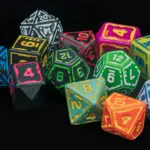
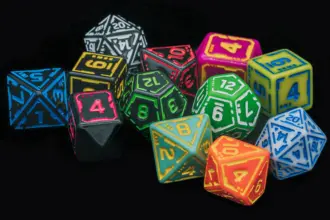
The mechanic in detail: six polyhedral dice — d4, d6, d8, d10, d12, d20 — together form the Gig Dice system. At the start of a game, all six sit in the „Fixer Area.“ Each turn, a player takes a die of their choice from the Fixer Area, rolls it, and moves it into their „Gig Area.“ The d20 has to be taken last — you can’t grab it ahead of its turn. Once a player has six or more gigs (meaning all dice are in the Gig Area), they win at the start of their next turn.
The die values aren’t just points — they generate „Street Cred,“ a kind of currency that activates bonus effects on cards. Some cards have effects that only fire at a certain Street Cred level. That links the dice results directly to the card-play layer and creates a second strategic layer. On top of that comes an aggressive mechanic: units with ten or more power can steal enemy Gig Dice on attack. That means a match can swing dramatically from a single steal — a player one turn from winning suddenly loses a gig and has to react.
On paper that sounds thematically elegant. Taking gigs, building street cred, holding off on the big job (the d20) because it triggers the endgame — that fits the Cyberpunk setting in a way that feels organic, not bolted on. The tactical decisions sound real: which die do I take when? Do I grab the d4 early (low street cred, but a gig is a gig), or do I hold out and hope that the d12 or d10 gives me a high street cred value that unlocks powerful card effects? When do I risk a power build to steal enemy dice? Is it worth playing aggressively to push the opponent back in gigs, or do I run defensive gig accumulation?
The question that decides whether Gig Dice is a viable system or a gimmick is variance. Dice mean randomness. And competitive TCG players have a fine ear for how much randomness is acceptable. Magic: The Gathering has spent the last twenty years systematically removing sources of randomness from the game — no dice, no coin flips on competitively relevant cards. Pokémon has coin flips, but they rarely decide games. Yu-Gi-Oh! operates almost deterministically.
If a single d4 roll (street cred 1) against a d12 roll (street cred 12) can flip a match, you get the kind of frustration that drives competitive players away. „I played better and still lost because my opponent rolled higher“ — that’s the sentence WeirdCo has to avoid at any cost. If, on the other hand, the die variance is moderate enough that deckbuilding and in-game decisions dominate outcomes and the dice are more about texture than direction, then the system works.
The balancing challenge is also not trivial. In a classical TCG, cards have to function in interaction with one another. In the Cyberpunk TCG, they additionally have to function in interaction with variable die values. A card that’s balanced at street cred 8 might be useless at street cred 3 and overpowered at street cred 15. That multiplies the balance variables, and every new set brings new cards that have to be tested against the existing die interactions. WeirdCo’s experienced team will know this — but knowing and executing are different things, especially across five planned years and dozens of sets.
Historically, dice-TCG hybrids have been a mixed bag. Heroclix uses dice combined with miniatures and has a loyal niche — over 20 years on the market now, which is an eternity for a tabletop game. But Heroclix is a miniatures game, not a TCG in the strict sense. Dice Masters from WizKids was the closer comparison: a game that combined dice and cards directly, with IPs like Marvel and D&D. It got discontinued. The history of dice-TCG hybrids doesn’t give a clear signal on whether the model works long term — there are both success stories and failures, and the sample size is too small to generalize from.
Early impressions at TCGplayer were positive and called out the freshness of the concept. Wargamer, after an interview with WeirdCo, emphasized the strategic depth of the mechanic. But the mass audience hasn’t been tested yet, and the competitive community in particular hasn’t really committed. The competitive scene doesn’t decide on first contact — it decides after the first meta season, after the first tournaments, after the first hundred games. If the Gig Dice mechanic gets perceived as „too random“ in that phase, the game loses exactly the players it would need for a living tournament scene.
One Piece Card Game on Amazon (ships internationally from amazon.de)
2027 will be the year of reckoning
Here’s the thing about Kickstarter TCGs: they rarely die at launch. Launch is the easy part — the backer millions pay for the first set, the fulfillment, the initial buzz. Backers are motivated to try the game because they paid for it and they want to want it. Stores list the game because the launch hype generates demand.
Altered didn’t die in September 2024. It died in March 2026, 18 months later. MetaZoo survived over three and a half years before the crash came. The time lag between launch and death is a pattern, not an accident — and it explains why so many backers get blindsided. You think the game is running because you still see booster packs on shelves. But under the surface, the pipeline of new players is drying up, tournaments are getting emptier, set pre-orders are falling. And by the time it’s visible, it’s usually too late.
The first set is survivable as long as the money is there. The question is what happens with the second.
The Cyberpunk TCG is expected to hit retail in Q3/Q4 2026. Express shipping for the more expensive pledge tiers starting Q3, everyone else Q4. Set 2 comes Q1/Q2 2027 at the earliest. That’s exactly when the Kickstarter backers will have played through their first set, analyzed the meta, and decided whether to stick around. The questions that matter at that moment are uncomfortably concrete:
Are the backers still actively playing in the fall of 2027? Not „do they own the cards,“ but are they playing weekly, going to stores, entering tournaments? Has a local tournament scene formed — not in the theory of the organized-play roadmap (Night City Brawl Weekly, Night City Showdown), but real, in game stores, on weekend evenings? Are new players joining who didn’t come through Kickstarter — people who see Set 2 in a store and think „I’ll try that“? And the most important one: does Set 2 sell well enough in retail to finance Set 3 without another crowdfund?
Sorcery and Grand Archive passed that test — four sets and six expansions plus a capstone, respectively, and counting. They’ve proven that their players stick around after the first set, that new players keep coming in, that the retail market carries the game. That’s the proof that counts. The proof WeirdCo still owes.
The 5-year roadmap and the OP structure show that WeirdCo has those questions on their radar. They know in theory what to do. But roadmaps cost nothing. Every failed TCG had a roadmap. Altered had a roadmap. MetaZoo had at least something resembling a vision. Planning a World Championship format is easy. Actually staging one with real players, in a real venue, in a real scene — that’s the task that costs five-digit work hours and that you can’t know beforehand will succeed.
If I had to make a bet, it would be this: if the Cyberpunk TCG delivers a strong second set in Q3 2027, can point to an active tournament scene, shows up in the top 15 at TCGplayer, and WeirdCo has built the store relationships Altered lost, then it has reached critical mass. Then it will survive, probably for a long time, with the IP power as a long-term growth driver. If not — if Set 2 flops, the tournaments stay empty, retail doesn’t pick up — then $15 million wasn’t enough. Altered had $6.7 million and that wasn’t enough either. More money shifts the timeline, but it doesn’t change the fundamental dynamic.
My personal take
I spent $7,999 on a Night City Legend tier. That was an emotional decision, fueled by real passion for the IP and a belief that this project can become something. A decision I don’t regret — but also not one I’d recommend as a pure investment. And I say that as somebody who has known the Cyberpunk universe since the tabletop RPG in the eighties and who binged Edgerunners three times.
What makes me optimistic is a combination of factors that no other Kickstarter TCG had in this form before. The team knows what it’s doing — Cook and Wei have credit in an industry where credit counts. The anti-scalper strategy shows that WeirdCo understands the real problems that broke other TCGs, not just the surface ones. The aesthetic Netrunner niche is real and has been open for eight years — no other TCG is competing in the Cyberpunk visual space. The Cyberpunk 2077 fanbase is big, active, and hungry for content that doesn’t exist right now. And the $15 million does give WeirdCo a somewhat longer runway than any other Kickstarter TCG before.
What worries me is mostly one data point: the gameplay reception. That’s the variable that scratches at the back of my mind at night. Community voices describe the gameplay hype as „noticeably milder“ than the financial hype. That might be harmless — maybe people are just cautious because they haven’t held the game in their hands yet. It could also be an early indicator that the game isn’t mechanically at the level it needs to be for long-term survival. If the Gig Dice mechanic turns out to be too random, if the meta turns out to be shallow, if the feel of playing doesn’t justify the price — then no IP, no marketing, no organized-play roadmap will save it. A TCG that isn’t fun to play dies.
I’ve seen Altered. I’ve seen MetaZoo. I know what it looks like when a TCG dies that probably shouldn’t be dying. I also know what Grand Archive and Sorcery look like — games that started small and grew because they did the right things: stay focused, nurture the community, ship regularly, don’t try to be everything at once.
The Cyberpunk TCG has the best preconditions of any Kickstarter TCG so far. Best team, strongest IP, most thought-through anti-scalper strategy, highest starting capital. That’s true, and denying it would be dishonest. But it stands in front of exactly the same structural challenge as all its predecessors: $15 million of backer money proves purchase interest. Playing interest has to be proven by the game itself, at real tables, in real stores, over real months.
The cards arrive Q3/Q4 2026. Set 2 arrives in 2027. Only then will we know whether the graveyard gets another headstone — or whether the Cyberpunk TCG becomes the first Kickstarter TCG to genuinely make the jump from crowdfunding phenomenon to self-sustaining ecosystem.
I’m hoping for the latter. And I’ll be there when the answer comes. With $7,999 on the table, you don’t have a choice.
Sources
- BoardGameWire — Equinox Altered TCG Shutdown (March 2026)
- TechRaptor — Altered TCG Roots of Corruption Cancellation
- TechRaptor — Altered TCG End-of-Support Timeline
- WeirdCo — Cyberpunk TCG Kickstarter Campaign
- Kickstarter — Case Study: Cyberpunk TCG Anti-Scalper Strategy
- Kickstarter — Cyberpunk TCG Most Funded Game Record
- TheGamer — Cyberpunk TCG Pledge Tiers & Stretch Goals
- TheGamer — Cyberpunk TCG Competitive Roadmap
- Wargamer — WeirdCo Interview (5-Year Plan)
- Cyberpunk TCG — Official Gameplay Guide
- TheGamer — Cyberpunk TCG Mechanics Explained
- TCGplayer — Bestselling TCGs Q4 2025
- Notebookcheck — Community Skepticism on the Cyberpunk TCG
- Pine Island Games — Speculative TCGs Analysis
- Wikipedia — MetaZoo
- VintageCCG — MetaZoo Community Controversies
- Sorcery TCG — December 2025 Rulebook Update
- Grand Archive TCG — Product Overview
- Gamers Guild — Grand Archive Growth 2025
- GM Insights — TCG Market Analysis 2025
- GameSpot — Cyberpunk TCG Launch Speed